Page 2 of 14

People, Look East

People, look east. The time is near
Of the crowning of the year.
Make your house fair as you are able,
Trim the hearth and set the table.
People, look east and sing today:
Love, the guest, is on the way.

Furrows, be glad. Though earth is bare,
One more seed is planted there:
Give up your strength the seed to nourish,
That in course the flower may flourish.
People, look east and sing today:
Love, the rose, is on the way.

Birds, though you long have ceased to build,
Guard the nest that must be filled.
Even the hour when wings are frozen
God for fledging time has chosen.
People, look east and sing today:
Love, the bird, is on the way.

Stars, keep the watch. When night is dim
One more light the bowl shall brim,
Shining beyond the frosty weather,
Bright as sun and moon together.
People, look east and sing today:
Love, the star, is on the way.

Angels, announce with shouts of mirth
Christ who brings new life to earth.
Set every peak and valley humming
With the word, the Lord is coming.
People, look east and sing today:
Love, the Lord, is on the way.

This beautiful poem was written by Eleanor Farjeon (1881 – 1965). Eleanor was an award-winning English author of primarily children’s literature. Born into a literary family, she started writing when she was a child, ultimately producing more than eighty books of children’s stories and poems, adult novels, and other work, plus numerous school plays. This poem was paired up with an old French melody to create a beloved Christmas carol that first appeared in 1928.

Love, the Lord, Is On the Way

When the angel, Gabriel, visits Mary, he shares two pieces of news — Mary, a virgin, will conceive and bear a son, whom she will call Jesus; and her cousin, Elizabeth, with her husband Zechariah, has also conceived a son in her old age and is now in the sixth month of her pregnancy. (Luke 1: 26-38)

The Gospel of Luke recounts that Mary leaves to visit Elizabeth as soon as Gabriel departs. When Mary enters the house of Zechariah and Elizabeth, here is what happens:

“And when Elizabeth heard the greeting of Mary, the child leaped in her womb; and Elizabeth was filled with the Holy Spirit and she exclaimed with a loud cry, ‘Blessed are you among women and blessed is the fruit of your womb!'” Luke 1: 41-42

Elizabeth, of course, is carrying John the Baptist in her womb. The presence of Jesus in Mary’s womb causes John to leap for joy. John is the one about whom it is written in the Old Testament:

“Behold, I am sending my messenger ahead of you; he will prepare your way before you.” (Malachi 3: 1, Isaiah 57: 14)

In these verses, we witness the world preparing to receive a Love like no other — Jesus, the Son of God.

In response to Elizabeth’s greeting, Mary utters these words, acknowledging and delighting in the miracle of her virgin conception of Jesus:

My soul proclaims the greatness of the Lord,
my spirit rejoices in God my Savior,
for he has looked with favor on his lowly servant.
From this day all generations will call me blessed:
the Almighty has done great things for me,
and holy is his Name.
He has mercy on those who fear him 
in every generation.
He has shown the strength of his arm,
he has scattered the proud in their conceit.
He has cast down the mighty from their thrones,
and has lifted up the lowly.
He has filled the hungry with good things,
and the rich he has sent away empty.
He has come to the help of his servant Israel
for he has remembered his promise of mercy,
the promise he made to our fathers,
to Abraham and his children forever.”
(Luke 1: 46-55)

This beautiful prayer is known as The Magnificat Prayer, or the Song of Mary.

As Christmas approaches and the world again prepares to celebrate the birth of Jesus, may this prayer of joy and thanksgiving remain on our lips and hearts.

A Love, like no other, is about to enter the world. ♥️

Love, the Lord Jesus, is on the way. ♥️

Jesus, In the Stillness

Through His life, death and resurrection, Jesus fulfills hundreds of Old Testament prophecies about the Messiah. And yet so many people missed the appearance of Jesus entirely, when He lived physically among us. In particular, the religious scholars of His day — the Pharisees, the ones who were supposed to be teaching people what to look for in the Messiah — did not recognize Him. Why?

Centuries after Jesus lived, died and rose again — and after countless stories of people coming to know Christ — we still fail to recognize Jesus. Why? In some cases, we choose to deny the truth of His promise. What is Jesus’ promise? That if we love God and love one another, we will share in the Kingdom of Heaven. (Luke 10: 25-28)

Is Love really that powerful? The Bible shows us that God’s love for us is never-ending — and that His Love cannot be quenched. (Song of Solomon 8: 7) The Bible tells us that plainly God’s Love is more powerful than any force. (Colossians 3: 14) Jesus Himself shows us that Love has the power to cover a multitude of sins so that we may move forward in our lives toward goodness. (1 Peter 4: 8)

Still, we sometimes choose not to believe in the power of Love.

At other times, we decide that loving the way Jesus loves is too difficult. Jesus’ kind of love asks us to place the needs of others before our own. (Luke 10: 25-37) His kind of love pushes us to embrace God’s plan for our lives instead of our own plans. (Ephesians 2: 10) And Jesus’ love is always grounded in humility. (John 13: 1-20) In a world growing noisier by the minute, it seems counterintuitive that quietly loving and serving others can bring us peace and fulfillment and joy.

Sometimes we fail to recognize Jesus simply because we are looking for Him in the wrong places. We are actively seeking Jesus and we want to know Him; and we are also expecting big things from Him — an undeniable, large sign in our physical world that proves Him to be near us. But Jesus is not in the big things — He is in the stillness and smallness of life:

“And behold, the Lord passed by, and a great and strong wind tore the mountains, and broke in pieces the rocks before the Lord, but the Lord was not there; and after the wind, an earthquake, but the Lord was not in the earthquake; and after the earthquake a fire, but the Lord was not in the fire; and after the fire a still small voice. And when Elijah heard it, he wrapped his face in his mantle and went out and stood at the entrance of the cave.” 1 Kings 19: 11-13

It is in the stillness — and sometimes even the darkness — of our lives that we find Jesus. Why? Because when we step away from the physical distractions of our lives, we are able to connect with Jesus heart to heart, and spirit to spirit. We also find Jesus when we look for Him in the small things of the world.

A beautiful story about this can be found in the book titled, Mister God, This Is Anna. The book follows the adventures of a young runaway named Anna. A kind man named Fynn finds her on the docks of London, and takes her in. As the man cares for her, Anna teaches Fynn about finding and knowing God.

One night, Anna and Fynn meet an old man named Woody, who lives in a shanty-town part of the city. It’s late, but this part of town is alive with people. Woody invites Anna and Fynn to sit with him by the fire. Anna asks Woody why he likes living in the dark. Here is his answer:

‘In faith, I do not love thee with mine eyes, for they in thee a thousand errors note; But ’tis my heart that loves what they despise.’ His nut-brown chuckle broke the spell. ‘Do you know that one? It’s one of Shakespeare’s sonnets.’

“‘They,’ he said, and his arms swept to embrace the world, ‘will tell you and encourage you to develop your brain and your five senses. But that’s only half of it, that’s only being half a human. The other half is to develop the heart and wits.’ He ticked them off on one old gnarled hand with the end of his pipe. ‘There’s common wit, there’s imagination, there’s fantasy, there’s estimation, and there’s memory.’

“Old Woody’s face turned upward, his spirit danced and was warmed out among the stars, while his body remained with us and was warmed by the old tin-can brazier. ‘Never let anyone rob you of your right to be complete. The daylight is for the brain and senses, the darkness is for the heart and the wits. Never, never be afraid. Your brain may fail you one day, but your heart won’t.'”1

This book excerpt reminds us to step away from the physical distractions of the world so that we can know and hear Jesus. Jesus speaks to us in the quiet of our hearts. Sometimes we miss Jesus because we look for Him only in the physical things of life. Jesus comes to us in the stillness.

This Christmas season, I hope we can all make extra time to be alone with Jesus. He is waiting for us so expectantly, in the quiet and stillness. He has so much to tell and show us.

Jesus loves you very much.

1Sydney Hopkins, writing under the pseudonym “Fynn,” Mister God, This Is Anna. (New York: Ballantine Books, a division of Random House, Inc., 1974), pages 151-152.

A Prayer of Gratitude

Accept, O Lord, our thanks and praise for all that You have done for us. We thank you for the splendor of the whole creation, for the beauty of this world, for the wonder of life, and for the mystery of love.

We thank you for the blessing of family and friends, and for the loving care that surrounds us on every side.

We thank you for setting us at tasks that demand our best efforts, and for leading us to accomplishments that satisfy and delight us.

We thank you also for the disappointments and failures that lead us to acknowledge our dependence on You alone.

Above all, we thank you for your Son Jesus Christ; for the truth of His Word and the example of His life; for His steadfast obedience, by which He overcame temptation; for His dying, through which He overcame death; and for His rising to life again, in which we are raised to the life of Your Kingdom.

Grant us the gift of your Spirit, that we may know Christ and make Him known; and through Him, at all times and in all places, may give thanks to You in all things. Amen.

Source: This prayer — titled, “A General Thanksgiving,” and found in the Book of Common Prayer of the Episcopal Church — seems a perfect close to a weekend that both concludes the Thanksgiving holiday and launches the Advent season.

An Inspiring Feast Day

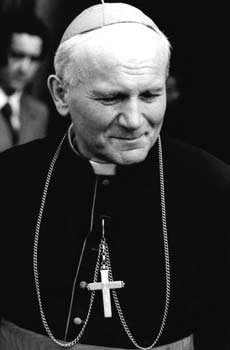
Today, October 22, is the feast day of Pope Saint John Paul II, marking his installation Mass in 1978 as the new Bishop of Rome. John Paul II was the first non-Italian pope elected in more than four centuries; and he served as Pope from October 16, 1978 until his death on April 2, 2005.

Known for his love of people, compassion, courage, and spiritual insight, Pope Saint John Paul II is remembered for his remarkable way of encouraging all people in their faith, wherever they were in their journeys. Here are some words from his homily in St. Peter’s Square, during his inaugural Mass:

“‘You are the Christ, the Son of the living God.’ (Matthew 16: 16) These words were spoken by Simon [Peter], son of Jonah, in the district of Caesarea Philippi. Yes, he [Peter] spoke them with his own tongue, with a deeply lived and experienced conviction — but it is not in him that they find their source, their origin: ‘… because it was not flesh and blood that revealed this to you but My Father in heaven.'” (Matthew 16: 17) They were the words of faith …

” … All of you who are still seeking God, all of you who already have the inestimable good fortune to believe, and also you who are tormented by doubt: please listen once again, today in this sacred place, to the words uttered by Simon Peter. In those words is the faith of the Church. In those same words is the new truth, indeed, the ultimate and definitive truth about man: the son of the Living God — ‘You are the Christ, the Son of the Living God.'”1

Pope Saint John Paul II guided us with the most loving care while he was with us in this world. He is also remembered today for his deep and unwavering conviction that Jesus is the only way, the only truth and the only life:

“Only in Christ can men and women find answers to the ultimate questions that trouble them. Only in Christ can they fully understand their dignity as persons created and loved by God. Jesus Christ is ‘the only Son from the Father…full of grace and truth.’”2 (John 1: 14)

May your hearts be filled with Jesus on this inspiring feast day.

1John Paul II. Homily of His Holiness John Paul II for the Inauguration of His Pontificate. The Holy See. October 22, 1978.

2John Paul II. World Youth Day, 1993. Denver, Colorado.

Photograph of Pope Saint John Paul II is courtesy of the Hulton Archive/Getty Images.  

Light and Life

The Incarnation of Christ — this mystery through which God, in the person of the Son, Jesus, becomes fully human while remaining fully divine — is evidence of God’s ongoing pursuit of our souls.

Jesus, who is both true God and true man, becomes the sole and timeless mediator between God and all humans. The Light and Life that Jesus brings into the world (John 1: 4-5) stands in stark contrast to the darkness and death that descended upon humanity when God’s creation freely chose death by eating the forbidden fruit in the Garden of Eden. (Genesis Chapter 3)

But if God is Love (1 John 4: 16) and truly desires to save the world from darkness and death through His Son, Jesus (John 3: 16), why do evil and violence continue to prevail in the world?

Habakkuk, a prophet who lived during the late seventh century B.C., is famous for asking God this very question:

“O Lord, how long shall I cry for help, and You will not hear? Or cry to you ‘Violence!’ and You will not save? Why do you make me see wrongs and look upon trouble?” Habakkuk 1: 2-3

Violence and evil are rampant when Habakkuk calls out to God. Clearly frustrated, Habakkuk boldly asks God how He can stand by and passively observe such evil? God answers through a vision that He asks Habakkuk to record:

“And the Lord answered me [Habakkuk], ‘Write the vision; make it plain upon tablets, so he may run who reads it. For still the vision awaits its time; it hastens to the end — it will not lie. If it seems slow, wait for it; it will surely come; it will not delay.” Habakkuk 2: 2-3

God doesn’t disagree with Habakkuk that things are bad. In fact God confirms that things are likely going to get worse for Habakkuk and his generation:

“For behold, I am rousing the Chaldeans, that bitter and hasty nation, who march through the breadth of the earth, to seize habitations not their own. Dread and fearsome are they; their justice and dignity proceed from themselves.” Habakkuk 1: 6-7

In light of this, God goes on to describe five woes to Habakkuk. These woes are pronouncements of judgment that are meant to condemn sin and to warn of its consequences:

Woe against Aggression: “Woe to him who heaps up what is not his own — for how long? — and loads himself with pledges! Will not your debtors suddenly arise, and those awake who will make you tremble? Then you will be booty for them. Because you have plundered many nations, all the remnant of the peoples shall plunder you, for the blood of men and violence to the earth, to cities and all who dwell therein.” Habakkuk 2: 6-8

Woe against Covetousness: “Woe to him who gets evil gain for his house, to set his nest on high, to be safe from the reach of harm! You have devised shame to your house by cutting off many peoples; you have forfeited your life. For the stone will cry out from the wall, and the beam from the woodwork respond.” Habakkuk 2: 9-11

Woe against Violence: “Woe to him who builds a town with blood, and founds a city on iniquity! Behold, is it not from the Lord of hosts that peoples labor only for fire, and nations weary themselves for nothing? For the earth will be filled with the knowledge of the glory of the Lord, as the waters cover the sea.” Habakkuk 2: 12-14

Woe against Inhumanity: “Woe to him who makes his neighbors drink of the cup of his wrath, and makes them drunk, to gaze upon their shame! You will be sated with contempt instead of glory. Drink, yourself, and stagger! The cup in the Lord’s right hand will come around to you, and shame will come upon your glory! The violence done to Lebanon will overwhelm you; the destruction of the beasts will terrify you, for the blood of men and violence to the earth, to cities and all who dwell therein.” Habakkuk 2: 15-17

Woe against Idolatry: “What profit is an idol when its maker has shaped it, a metal image, a teacher of lies? For the workman trusts in his own creation when he makes dumb idols! Woe to him who says to a wooden thing, Awake; to a mute stone, Arise! Can this give revelation? Behold it is overlaid with gold and silver, and there is no breath at all in it. But the Lord is in His Holy Temple; let all the earth keep silence before Him.” Habakkuk 2: 18-20

Violence and evil are still rampant today; and Biblical woes can provide us direction and hope. In particular, they offer both interpretation and application of God’s Holy Commandments. (Exodus 20: 1-20)

But let’s face it, Biblical woes can also be difficult and uncomfortable to read. Specific to Habakkuk’s story, I think the real danger is to dismiss the darkness described in the woes because it seems, somehow, beyond our reach. Are any of us committing sin on the scale described in Habakkuk’s vision? Maybe not. But the troubling thing about darkness and evil is that it so often begins on a small scale.

Who cares if I need a drink or two to get through my work day; isn’t that better than using harder drugs? I sure love collecting religious items, but is my focus on God or the thrill of finding these unique treasures? I may be spending 60-plus hours at work each week to avoid some problems, but would my brother really respond if I spent more time with him? I know that sometimes I lash out at my kids with my sharp tongue, but isn’t that better than physically hitting them? I spend a lot of time on social media and may end up on sites that take me down confusing paths, but my sense of reality isn’t blurred, is it? So what if I take office supplies from work for my home; my company makes so much money, what does it matter?

It’s helpful to read the woes revealed to Habakkuk with a broad lens, looking for the big and small ways that these behaviors show up in our lives.

It’s also helpful to remember that God shares these woes as reminders of His Mercy and Love. The woes provide a way for us to avoid sin and judgement through repentance and faith in Him. Habakkuk recognizes this and responds to God in a way that demonstrates renewed faith and hope:

“Yet I will rejoice in the Lord, I will joy in the God of my salvation. God, the Lord, is my strength; He makes my feet like deer’s feet, He makes me tread upon my high places.” Habakkuk 3: 18-19

Which brings me back to Jesus … and the Light He has brought into this world. ♥️

When you have difficult days, remember how much God loves us. If it feels like God is taking too long to respond, wait for Him — trust that He’s out ahead somewhere, preparing the path for you. Habakkuk’s story is one of countless stories in the Old Testament that reveal God’s endless quest to help us to live good and loving lives.

The entire New Testament is a stunning record of God’s decision to send His Beloved Son, Jesus, for the salvation of the world. This first coming of Christ was done in order that all who believe in Him “should not perish but have eternal life.” (John 3: 16) In the Book of Revelation, Jesus plainly tells us that He will be back:

“Surely, I am coming soon,” [says the Lord]. Revelation 22: 20

I love this verse in Revelation. It’s literally one of the last sentences of the Bible! I can’t help but marvel at the fact that it’s this promise that God chooses to close the Bible. God loves us and He does not intend for us to be alone or separated from Him. When Jesus returns the second time, God will establish a new heaven and a new earth, where He will eternally dwell with all the believers and redeemed, where there is no pain or sorrow or mourning. (Revelation 21: 1-8)

God loves us deeply and without end. Jesus is fighting for our souls, ready to offer His Love and Mercy and Forgiveness to all of us who desire it.

There is no sin or darkness that Jesus cannot overcome. On your darkest days, always know and trust in this truth. ♥️

“And the Spirit and the bride says, ‘Come!’ And let him who hears say, ‘Come!’ And let him who thirsts come. Whoever desires, let him take the water of life freely.” Revelation 22: 17

Grace and Truth

“In the beginning was the Word, and the Word was with God, and the Word was God. He was in the beginning with God. All things were made through Him, and without Him nothing was made that was made.

“In Him was life, and the life was the light of men. And the light shines in the darkness, and the darkness has not overcome it …The true light that enlightens every man was coming into the world. He was in the world, and the world was made through Him, yet the world knew Him not.

“He came to His own home and His people did not receive Him. But to all who received Him, who believed in His name, He gave power to become children of God; who were born not of blood nor of the will of the flesh nor of the will of man, but of the will of God.

“And the Word became flesh and dwelt among us, full of grace and truth; we have beheld His glory, glory as of the only-begotten Son from the Father … And from His fullness have we all received grace upon grace. For the law was given through Moses; grace and truth came to us through Jesus Christ.

“No one has ever seen God; but the only begotten Son, Jesus Christ, who is in the bosom of the Father, has made the Father known to us.” John 1: 1-5, 9-14, 16-18

And so we pray — Beloved Father, thank you for Your boundless love. Thank you for sending your beloved Son, Jesus Christ, to help us to see and fully receive the grace and truth of your Holy Commandments, which are meant to help us to live in goodness and in peace. Dearest Jesus, our Savior and Light, thank you for Your boundless mercy and for coming to dwell among us. You are the ONLY Way, the ONLY Truth, and the ONLY Life — the ONLY way home to the Father and to an eternal life filled with boundless love and joy and peace. Come, Holy Spirit, fill our hearts and minds and souls with the humility and desire to seek Jesus out every day, multiple times a day, so that we may be strengthened and made holy through His boundless love and counted among His flock. Amen.

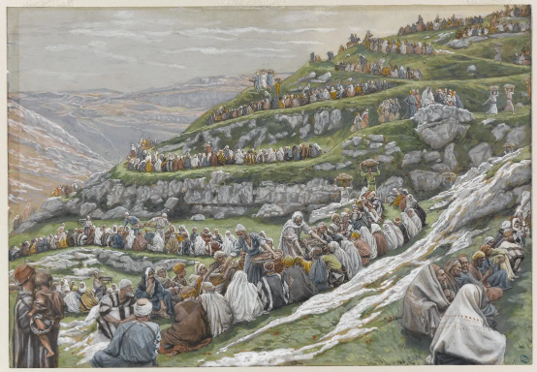
The Miracle of the Loaves and Fishes (1886-1896), which is part of James Tissot’s “The Life of Our Lord Jesus Christ” series, today hangs in Brooklyn Museum.

Lord, Help Us to Know You

In 2007, shortly after his election to the papacy in 2005, Pope Benedict XVI published a book titled, Jesus of Nazareth: From the Baptism in the Jordan to the Transfiguration.

In the book’s introduction, Pope Benedict describes that this book is in “no way an exercise of the magisterium, but is solely an expression of my personal search ‘for the face of the Lord’ (Psalm 27: 8).” (Foreword, p. xxiii)

These heart-felt words from a man who dedicated his life to God set the stage for an engaging and thought-provoking exploration of Jesus’ public ministry, including His baptism by John the Baptist, His Sermon on the Mount, the meaning of the parables, His calling of the twelve apostles, Peter’s confession and the Transfiguration.

This book is sitting near my keyboard as I write today’s post. My underlines and scribbled notes reflect how Pope Benedict effortlessly guides readers through historical-critical, Biblical and philosophical writings and perspectives. His writing compels readers to pause and think about what Jesus is trying to show humankind. The end result is a book that helps its readers to more clearly see Jesus “in light of His communion with the Father” (Foreword, p. xiv), which in turn reveals Jesus as the one path to truth and to God the Father.

One of Pope Benedict’s concerns, as he reveals in the Foreword, is that historical-critical scholarship in particular has distracted and divided us. Perhaps at times we have been so consumed by the debate that we focused more on winning the argument versus finding the answers. This distracts us from seeing and knowing Jesus as God intends — as “the Word [who] became flesh and dwelt among us, full of grace and truth … [and] the only-begotten Son from the Father.” (John 1: 14)

Is Pope Benedict suggesting that we abandon the practice of historical-critical thought and analysis? Absolutely not! Historical context and critical thinking matter immensely. When asked which is the greatest commandment in the law, Jesus said:

“You shall love the Lord your God with all your heart, and with all your soul, and with all your mind. This is the great and first commandment.” Matthew 22: 36-38

Jesus wants us to use our minds and to think deeply about what He is trying to show us.

But Pope Benedict asserts that this mental knowing cannot be a mere intellectual exercise. Knowing God with our minds must also be an experiential relationship that renews the mind to align our thoughts with God’s truths. To understand God’s Word and purposes is a process ultimately inspired and enabled by the Holy Spirit, transforming our desires and intentions to align with God’s Will.

Pope Benedict reminds us that historical-critical scholarship is merely one lens through which God is revealed to us. Another essential lens for knowing Jesus is the Bible itself.

I have heard people describe that the more we read the Bible, the more the Bible begins to read us. The very breath and life of God is in those sacred pages; and when we spend time alone with God there, He reads the questions on our hearts and minds. Through the intercession of the Holy Spirit, God guides us to the Bible stories and verses that provide the answers we seek.

One thing I greatly appreciate about Pope Benedict’s book is the reminder that we do not need to be Biblical scholars to read the Bible. While there are certainly moments within his book where Pope Benedict’s exegesis or interpretation of various texts is intense, he reminds us again and again that to know God and to better understand His ways, we simply need to desire a relationship with God, through Jesus. As we cultivate this relationship, our awareness and understanding of God grows.

Pope Benedict’s book memorably demonstrates how all of this works together. I regard his book as an unexpected combination of a man’s very personal diary with an impressive study guide that challenges us to go deeper and deeper into our exploration of who Jesus was and is and will be for all time. Over and again, as Pope Benedict explores varied texts for views of Jesus, he brings us back to the Bible, encouraging us to explore this most sacred text and to form our lasting views of Jesus and His holy communion with the Father there. Through the life, death and resurrection of Jesus, God bridges the Old and New Testaments in ways that bring mercy and peace and understanding and love … and “an intimate friendship with Jesus, on which everything depends.” (Foreword, p. xxiii)

Pope Benedict XVI published two more books — Jesus of Nazareth: Holy Week: From the Entrance into Jerusalem to the Resurrection and Jesus of Nazareth: The Infancy Narratives — creating a New York Times Bestseller three-volume series.

I am incredibly grateful for all of these books.

“Lord, help me to come to know You more and more. Help me to be ever more at one with Your will. Help me to live my life not for myself, but in union with You, to live it for others. Help me to become ever more Your friend.”
– Excerpt from a homily of Pope Benedict XVI, delivered approximately 60 years after his priestly ordination.

The Slim Crescent of a Moon

“Dear God, I cannot love Thee the way I want to.

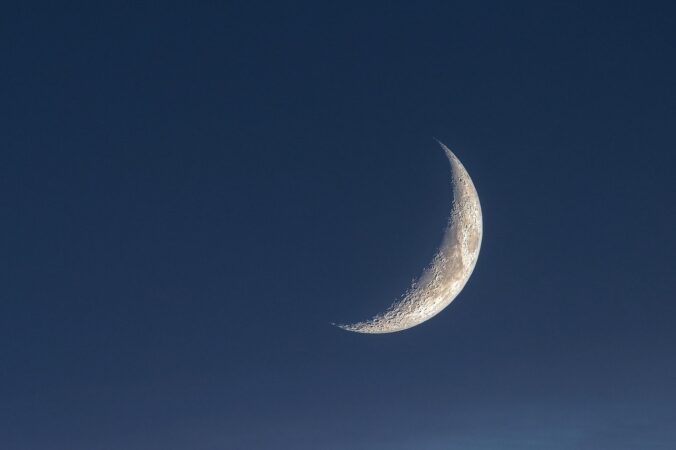
“You are the slim crescent of a moon that I see and my self is the earth’s shadow that keeps me from seeing all the moon.

“The crescent is very beautiful and perhaps that is all one like I am should or could see; but what I am afraid of, dear God, is that my self shadow will grow so large that it blocks the whole moon, and that I will judge myself by the shadow that is nothing.

“I do not know you God because I am in the way.

“Please help me to push myself aside.”*

*A prayer from Flannery O’Connor, American novelist, short story writer, essayist and devout Catholic.

A New Heart, I Will Give You

Last week, I shared the first part of a speech that St. Paul delivers on the Aeropagus on Mars Hill in Athens. Paul is debating and arguing with the Jews and others about their worship of pagan and false gods, and preaching about Jesus and the resurrection. Paul is the first to preach Christianity in Athens and not surprisingly, he catches the attention of the Epicurean and Stoic philosophers. They take Paul to the Aeropagus and order him to talk more about the new doctrine that he is teaching:

“And they took hold of him [Paul] and brought him to the Aeropagus, saying, ‘May we know what this new teaching is which you present? For you bring some strange things to our ears; we wish to know therefore what these things mean.'” Acts 17: 19-20

Paul concludes his remarks with two sentences rich in meaning. First, Paul says:

“Being then God’s offspring, we ought not to think that the Deity is like gold, or silver, or stone, a representation by the art and imagination of man.” Acts 17: 29

By reminding us that we are God’s offspring, Paul confirms that we are made in God’s image. (Genesis 1: 26-27) Knowing that God is Love (1 John 4: 16), Paul infers that we, like God our Father, are all beings — God is a Divine being and we are human beings, all created to love and to be loved. While we can certainly form emotional attachments to things made out of gold or silver, it’s impossible to form a meaningful and mutual bond with inanimate objects “that neither see, nor hear, nor eat, nor smell.” (Deuteronomy 4: 28)

It is, however, entirely possible to build and sustain a relationship with a Living God. From the beginning, this has been God’s plan for us:

For Moses said, “But from there you will seek the Lord your God, and you will find Him, if you search after Him with all your heart and with all your soul.” Deuteronomy 4: 29

Think about the Ten Commandments handed down by God to Moses (Exodus 20: 1-20), which are all about how to live in relationship with one another. The first four Commandments focus on our relationships with God and our parents; and the other six focus on all the other relationships that exist in our lives. Yes, God is a Divine and Holy Being above all else. He is also a Living and Loving Being who is constantly inviting us into deeper relationship with Him.

Paul’s revelation about God must have caused the philosophers and intellectuals to wonder about the pagan idols spread across their city. Is it possible these great thinkers have missed the truth about God? And about Jesus?

The fact is that our lives are cluttered with idols still today. Why do we get caught up in the jobs we have or the cars we drive or the houses we live in or the jewelry and clothes we wear? Why do we care more about what our neighbors think than what God thinks? How is it that we wear crosses on our bodies and display religious artifacts in our homes but can’t seem to get out of bed thirty minutes early each day to spend time with God?

Let’s face it — it is easy to take our eyes off God. This is a dangerous thing because we miss what He is trying to show us. God does not generally speak to us in big and loud ways. He is usually not in the earthquakes and wind and fires. Instead, God is the still, small voice that speaks to us in the everyday things of life. (1 Kings 19: 11-13) The less time we spend getting to know God and His Ways, the more chances we have of pursuing things on earth that do not help us or anyone else make it to heaven. This is how and why Jesus comes into our lives.

Here is the final sentence of Paul’s speech on Mars Hill:

“The times of ignorance God overlooked, but now He commands all men everywhere to repent, because He has fixed a day on which He will judge the world in righteousness by a man whom He has appointed, and of this He has given assurance to all men by raising Him from the dead.” Acts 17: 29-31

In the first phrase above, Paul confirms God’s willingness to overlook our times of ignorance. Not long after God shares the Ten Commandments with Moses, it becomes clear that people are missing the point of these Commands. We observe so many Old Testament characters have an encounter with God that impacts them significantly and emboldens them to live differently. But after some time, they begin to slip back into their old ways of living, moving further away from God and missing the point of what it means to live and to love and to be loved by God.

So God, in His Infinite Mercy, sends Jesus to earth to show us the way back to God. Jesus — the Living Word and Promise of God — becomes flesh and lives among us for a time. (John 1: 14) Jesus shows us that to know God requires that we allow our hearts and minds and lives to be transformed by Jesus.

St. Paul speaks of being transformed by Jesus:

“I appeal to you therefore, brethren, by the mercies of God, to present your bodies as a living sacrifice, holy and acceptable to God, which is your spiritual worship. Do not be conformed to this world, but be transformed by the renewal of your mind, that you may prove [or live out] what is the will of God, what is good and acceptable and perfect.” Romans 12: 1-2

Through the final sentence of his speech on the Aeropagus, Paul describes that this transformation comes through repentance. In a Biblical sense, repentance is not just about feeling sorry for past sins. The Holman Illustrated Bible Dictionary describes repentance as a “change of mind” —

“In response to the call of God in one’s life, there must be repentance, that is, the willful determination to turn from a life of sin and self-rule to a life ruled by God and lived in His righteousness.1

Paul concludes his speech on the Aeropagus by affirming the urgency of our repentance:

” … because He [God] has fixed a day on which He [Jesus] will judge the world in righteousness by a man [Jesus] whom He [God] has appointed, and of this He [God] has given assurance to all men by raising Him [Jesus] from the dead.” Act 17: 31

Shortly before Jesus was crucified, Jesus tells believers and non-believers alike that He will return to judge the living and the dead. (Matthew 25: 31-46) By examining the details of our lives, Jesus will decide who transcends death to spend eternal life with God — and who will be cast into the fires of hell and separated forever from God.

God loves us so much. He does not want any of us remain separate from Him. But St. Paul tells the Athenians on Mars Hill — and all of us who read his speech — that we choose to separate from God by choosing to remain ignorant of of who Jesus is and why He comes to dwell with us.

I imagine Paul standing in the middle of that rocky hill near the Acropolis, passionately delivering his plea for repentance. Paul knows the power of repentance. Remember that before Paul responds to Jesus’ call to repent, he is persecuting and killing Christians! Paul’s decision to follow Jesus transforms him into one of the world’s most influential apostles and the author of a significant portion of the New Testament. (Acts 9: 1-22, Acts 22: 1-21, Acts 26: 1-23)

Paul’s transformation and his impact on the world is truly stunning. ♥️

I would argue that every transformation in Christ and through Christ is stunning and beautiful. ♥️

I think sometimes we worry too much about being enough for Jesus. I think we worry too much about what we might lose or give up in choosing to follow Him. And I think sometimes we even worry about whether it’s too late to follow Jesus. Does He even still remember me? Will He really forgive me, if I stop sinning? And will I be able to keep my mind and heart focused on Jesus?

The choice to follow Jesus is always ours to make. The world is filled with endless distractions, but Paul assures us that Jesus will be faithful to those who decide to follow Him and will not allow us to be tempted beyond what we can endure. (1 Corinthians 10: 13)

Even as we follow Jesus, there are trials, but He leads us through them. (John 16: 33) When we turn to Jesus and draw near to Him, He draws near to us. (James 4: 8) Jesus strengthens us in ways we cannot even imagine and gives us everything we need to lead good and loving lives. (Philippians 4: 13)

The choice to follow Jesus is simple.

The best things in life are always simple and right before us.

“A new heart I will give you, and a new spirit I will put within you; and I will take out of your flesh the heart of stone and give you a heart of flesh. And I will put my spirit within you, and cause you to walk in my statutes and be careful to observe my ordinances. You shall dwell in the land which I gave to your fathers; and you shall be My people, and I will be your God.” Ezekiel 36: 26-28

1Holman Illustrated Bible Dictionary (Tennessee: Holman Bible Publishers, 2003), Pages 1375-1376.


« Older posts Newer posts »