Jesus is Here with Us

After Jesus rises from the dead, He appears to more than 500 men and women. He remains on earth for 40 days before returning to the Father. (1 Corinthians 15:6)

The first person to see the Risen Jesus is Mary Magdalene. She arrives at His tomb early on Sunday morning, after the Sabbath has ended; and to her surprise and dismay finds the stone removed and the tomb empty. She runs to get Peter and John; and together they return to the tomb.

Peter and John enter the tomb, find Jesus’ burial cloths, and immediately believe. But Mary Magdalene remains outside the tomb, crying. After Peter and John leave, Mary turns around and sees Jesus standing there. At first, she mistakes Him for a gardener. But when Jesus speaks, Mary immediately recognizes His voice and embraces Him! (John 20: 1-18) As John writes earlier in his Gospel, the Good Shepherd knows His sheep and calls them by name; and His sheep know His gentle voice. (John 10: 1-5)

Mary holds on to Jesus so tightly that He has to tell her to let go of Him! We can all imagine not wanting to let go of Jesus.

Another account of the Risen Jesus appearing to His disciples is recorded in the Gospel of Luke. Two disciples are making their way to a village called Emmaus, which lies about seven miles outside of Jerusalem. The Gospel identifies only one of the disciples — Cleopas, or Clopas, the younger brother of St. Joseph. Some scholars surmise that the other disciple is Mary, the wife of Clopas. Among other things, this explains why “Mary, the wife of Clopas,” was standing by Jesus’ own Mother Mary, at the foot of the cross. She was trying to comfort her sister-in-law. (John 19: 25)

As the two walk, they are discussing everything that has happened – the trial of Jesus, His crucifixion, and His purported resurrection. Suddenly, Jesus shows up alongside them:

“That very day, two of them were going to a village named Emmaus, about seven miles from Jerusalem, and talking with each other about all that happened. While they were talking and discussing together, Jesus Himself drew near and went with them. But their eyes were kept from recognizing Him.

“And He [Jesus] said to them: ‘What is this conversation which you are holding with each other.’ And they stood still, looking sad. Then one of them, named Cleopas answered Him, ‘Are you the only visitor to Jerusalem who does not know the things that have happened there in these days?’

“And He [Jesus] said to them, ‘What things?’

“And they said to Him [Jesus], ‘Concerning Jesus of Nazareth, who was a prophet mighty in deed and word before God and all the people, and how our chief priests and rulers delivered Him up to be condemned to death, and crucified Him. But we had hoped He was the one to redeem Israel. Yes, and besides all this, it is now the third day since this happened. Moreover, some women of our company amazed us. They were at the tomb early in the morning and did not find His body; and they came back saying that they had even seen a vision of angels, who said He was alive. Some of those who were with us went to the tomb; and found it just as the women had said; but Him they did not see.’

“And He [Jesus] said to them, ‘O foolish men, and slow of heart to believe all that the prophets have spoken! Was it not necessary that the Christ should suffer these things and enter into His glory?’ And beginning with Moses and all the prophets, He interpreted to them in all the Scriptures the things concerning Himself.

“So they drew near to the village to which they were going. He [Jesus] appeared to be going further, but they constrained Him saying, ‘Stay with us, for it is toward evening and the day is now far spent.’ So He went in to stay with them. When He was at table with them, He took the bread and blessed and broke it, and gave it to them. And their eyes were opened and they recognized Him; and He vanished out of their sight.

“They said to each other, ‘Did not our hearts burn within us while He [Jesus] talked to us on the road, while He opened us to the Scriptures?’ And they rose that same hour and returned to Jerusalem; and the found the Eleven gathered together and those who were with them, who said, ‘The Lord has risen indeed, and has appeared to Simon [Peter]!’ Then they told what had happened on the road, and how He was known to them in the breaking of the bread.” Luke 24: 13-35

Once again, we can imagine the great joy of Clopas and his wife, Mary, when they recognize Jesus at their dinner table — blessing, breaking and offering them bread. Jesus is indeed “the Bread of Life … the living bread which came down from heaven; if anyone eats of this bread, he will live forever.” (John 6: 48, 51) Through this gentle and merciful act, Jesus assures His disciples — and all of us — that our spiritual communion with Him is the bread of life that will sustain us here on earth.

These stories reveal that Jesus takes great care with His disciples, patiently resolving various mysteries when each disciple is ready to receive Him.

The depth of Jesus’ Love and Mercy is a wondrous thing to contemplate.

Jesus is still alive.

God is still here among us.

Jesus is here right now, beside you and me, calling us to move forward with Him into the greater fullness of God’s Love.
Rab-boni!

All four Gospels recount the miraculous and merciful Resurrection of Jesus. The Gospel of John records the events of that morning as follows:

“Now on the first day of the week, Mary Magdalene came to the tomb early, while it was still dark, and saw that the stone had been taken away from the tomb. So she ran, and went to Simon Peter and the other disciple, the one whom Jesus loved, and said to them, ‘They have taken the Lord out of the tomb, and we do not know where they have laid Him.’

“Peter then came out with the other disciple, and they went toward the tomb. They both ran, but the other disciple outran Peter and reached the tomb first, and stooping to look in, he saw the linen cloths lying there, but he did not go in.

“Then Simon Peter came, following him, and went into the tomb; he saw the linen cloths lying, and the napkin, which had been on His head, not lying with the linen cloths but rolled up in a place by itself.

“Then the other disciple, who reached the tomb first, also went in, and he saw and believed; for as yet they did not know the Scripture that He must rise from the dead. Then the disciples went back to their homes.

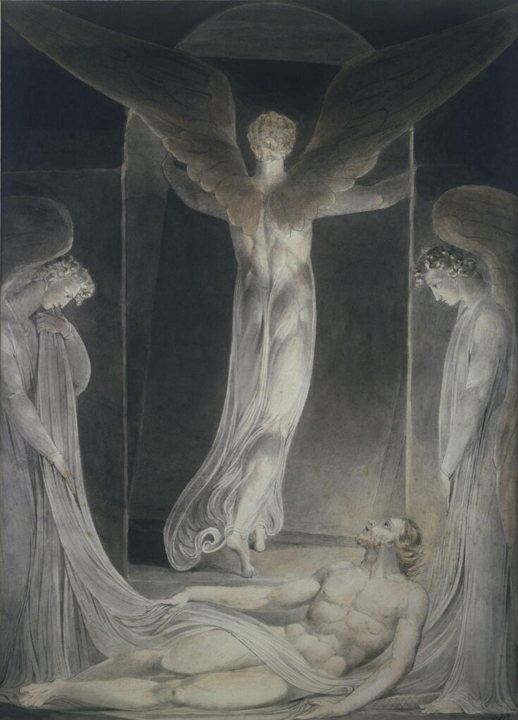
But Mary stood weeping outside the tomb, and as she wept she stooped to look into the tomb; and she saw two angels in white, sitting where the body of Jesus had lain, one at the head and one at the feet.

“They said to her, ‘Woman, why are you weeping?’

“She said to them, ‘Because they have taken away my Lord, and I do not know where they have laid Him.’

“Saying this, she turned round and saw Jesus standing, but she did not know that it was Jesus. Jesus said to her, ‘Woman, why are you weeping? Whom do you seek?’

“Supposing Him to be the gardener, she said to him, ‘Sir, if you have carried Him away, tell me where you have laid Him, and I will take Him away.’

“Jesus said to her, ‘Mary.’

“She turned and said to Him in Hebrew, ‘Rab-boni!’ (which means Teacher)

“Jesus said to her, ‘Do not hold Me, for I have not yet ascended to the Father; but go to My brethren and say to them, I am ascending to My Father and your Father, to My God and your God.’

“Mary Magdalene went and said to the disciples, ‘I have seen the Lord;’ and she told them what He had said to her.'” John 20: 1-18

Can you imagine the scene? Can you imagine the joy and wonder Mary Magdalene feels when she hears the voice of her friend and recognizes the Risen Christ?!

Following His Resurrection, Jesus walked the earth for 40 days and appeared to more than 500 men and women, before He returned to the Father. (1 Corinthians 15: 6) Jesus knew how hard it would be for His disciples – and for all of us – to understand all that had happened throughout His life, trial, crucifixion and resurrection. Always the patient teacher, Jesus took extra care to help His early disciples and followers to understand.

Still today, Jesus patiently reveals different pieces of the mystery of His life, death, and resurrection to each of us, as we are ready and willing to make time for Him. He wants to help us to understand the depth of God’s Love.

Jesus is Risen and with us still today!

Listen for the sound of His Voice on your hearts, as He offers all of us a share in His eternal life and love.

He loves you deeply.

Happy Easter, dear readers!

The Hour of Great Mercy

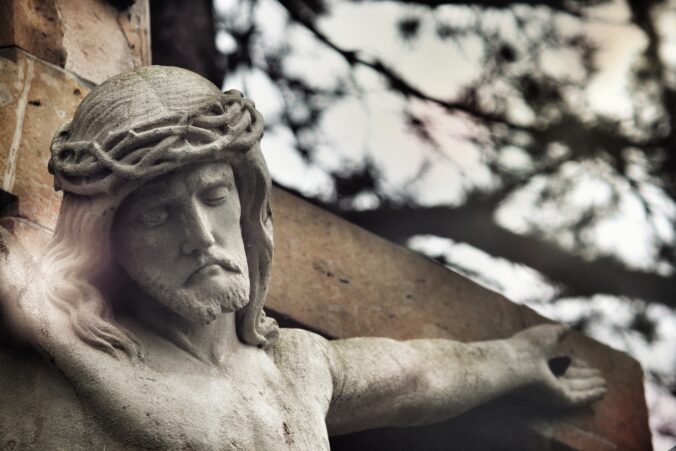
Jesus was crucified at Noon on a Friday, the day of weekly preparation for the Sabbath, and during Passover week. (John 19: 44)

The Gospel of John reveals that standing at the foot of the Cross were Jesus’ mother, Mary; Mary, the wife of Clopas; and Mary Magdalene. John, who was one of Jesus’ twelve disciples, was also at the foot of the Cross. (John 19: 25-27)

The Gospels of Matthew, Mark and Luke reveal that a group of women who had followed Jesus from Galilee stood at a distance from the Cross and observed all that happened. (Matthew 27: 55, Mark 15: 41, Luke 23: 49)

Jesus died at 3 p.m., the hour of great Mercy for the world. (John 19: 44)

The Gospels indicate that our world shuddered when Jesus’ Spirit and Light departed. For some time, the land was covered in darkness:

From the Gospel of Matthew: “And behold, the curtain of the temple was town in two, from top to bottom; and the earth shook, and the rocks were split.” (Matthew 27: 51)

From the Gospel of Mark: “And the curtain of the temple was torn in two, from top to bottom.” (Mark 15: 38)

From the Gospel of Luke: “There was darkness over the whole land until the ninth hour, while the sun’s light failed; and the curtain of the temple was torn in two.” (Luke 23: 44-45)

From the Gospel of John: “The sun’s light failed; and the curtain of the temple was torn in two.” (John 19: 45)

After Jesus died, Joseph of Arimathea, a wealthy man who was secretly a disciple of Jesus, asked Pilate if he could take away the body of Jesus for burial. Pilate agreed; so Joseph, along with Nicodemus, who had also first come to Jesus secretly as a disciple, prepared Jesus’ body and buried Him in a new tomb.

And then all of Creation waited in silence.

Centuries later, the Lord Jesus said to Saint Maria Faustina Kowalska:

“At three o’clock, implore [or beg for] My mercy, especially for sinners, and, if only for a brief moment, immerse yourself [in contemplation of] My Passion, particularly in My abandonment at the moment of agony. This is the hour of great mercy for the whole world.1

1Saint Maria Faustina Kowalska, Diary of Saint Maria Faustina Kowalska: Divine Mercy in My Soul (Massachusetts: Marian Press, 2020), Verse 1320, page 474.

The Betrayal of Jesus

“Then one of the Twelve [disciples], who was called Judas Iscariot, went to the chief priests and said, ‘What will you give me if I deliver Him to you?’ And they paid him thirty pieces of silver. And from that moment he sought an opportunity to betray him [Jesus].” Matthew 26: 14-16

Always, we read these verses from Matthew’s Gospel with great shock and sorrow. How could Judas betray Jesus for thirty pieces of silver? What was he thinking?

In our minds, we know that the betrayal of Christ was foretold by the ancient prophets:

“Then I said to them, ‘If it seems right to you, give me my wages; but if not, keep them.’ And they weighed out as my wages 30 shekels of silver. Then the Lord said to me, ‘Cast it into the treasury — the lordly price at which I was paid off by them.'” Zechariah 11: 12-13

The betrayal of Jesus is even more humiliating because Judas was one of Jesus’ Twelve disciples:

“Even my bosom friend in whom I trusted, who ate of my bread, has lifted his heel against Me.” Psalm 41: 9

Why did the betrayal come from one of Jesus’ chosen disciples?

We know that every single word in the Bible — and every act and teaching of Jesus — is divinely inspired. Jesus knew that the shock of Judas’ betrayal would compel us to stop and think about the times that we ourselves have betrayed Him — in thought or deed, in ways big and small, and for countless reasons. The fact that Judas was a close companion of Jesus stands as a warning for all of us — we must always remain on guard against words and actions that betray and cast aside the Love of Jesus.

The Mercy of Jesus is so vast. Still today, Jesus stands between us and the Father and cries out:

“Father, forgive them; for they know not what they do.” Luke 23: 34

Jesus’ Love for us is equally vast. Only we can choose to separate ourselves from His Love. There is nothing else in all of Creation — not life, nor death, nor angels or principalities, nor things present or to come, nor height, nor depth, nor powers — that can separate us from the Love of God in Christ Jesus. (Romans 8: 38-39)

As each new day dawns, Jesus waits quietly for us, offering us the chance to begin anew, together. (Lamentation 3: 22-24)

And so we pray: Dearest Guardian Angels, please stay near to us. Help us to not say or think or do things that offend the Mercy and Love of Jesus. Help us to hope always in Jesus; and to draw nearer and nearer to Him with each new day. Amen.

God’s Promises, Fulfilled in Jesus

Centuries before the Birth, Passion, Death and Resurrection of Jesus, the prophet Isaiah wrote about the arrival of a humble but rejected Servant of God:

“For He grew up before him like a young plant,
and like a root out of dry ground;
He had no form or comeliness that we
should look at Him,
and no beauty that we should desire Him.

He was despised and rejected by men;
a Man of Sorrows, and acquainted with grief.”
Isaiah 53: 2-3

Isaiah and other Old Testament prophets and writers also made predictions about the life, death and resurrection of this long-awaited Messiah. In stunning form, all of their predictions were fulfilled in Jesus. Following are some of the amazing predictions made and fulfilled in Christ:

Conceived and born of a Virgin: “Therefore, the Lord Himself will give you a sign. Behold, a Virgin shall conceive and bear a son, and shall call His name Immanuel.” (Isaiah 7: 14, fulfilled in Luke 1: 26-35)

Born in Bethlehem: “But you, O Bethlehem Ephrathah, who are little to be among the clans of Judah, from you shall come forth for Me one who is to be ruler in Israel, whose origin is from of old, from ancient days.” (Micah 5: 2, fulfilled in Luke 2: 4-7)

Betrayed and sold for 30 pieces of silver: “Then the Lord said to me, ‘Cast it into the treasury’ — the lordly price at which I was paid off by them.” (Zechariah 11: 13, fulfilled in Matthew 26: 15)

Betrayal money used to buy a potter’s field, called the Field of Blood to this day: “Then I said to them, ‘If it seems right to you, give me my wages; but if not, keep them.’ And they weighed out as my wages 30 shekels of silver. Then the Lord said to me, ‘Cast it into the treasury — the lordly price at which I was paid off by them.'” (Zechariah 11: 12-13, fulfilled in Matthew 27: 5-8)

Silent when questioned and accused: “He was oppressed, and He was afflicted, yet He opened not His mouth; like a Lamb that is led to the slaughter, and like a sheep that before its shearers is silent, so He opened not His mouth.” (Isaiah 53: 7, fulfilled in Matthew 27: 11-14)

Condemned with criminals: “Therefore I will divide Him a portion with the great, and He shall divide the spoil with the strong; because He poured out His soul to death, and was numbered with the transgressors; yet He bore the sin of many, and made intercession for the transgressors.” (Isaiah 53: 12, fulfilled in Luke 23: 32-34 and Mark 15: 27)

Crucified and hung on a Cross: “Yes, dogs are round about Me; a company of evildoers encircle Me; they have pierced My hands and feet.” (Psalm 22: 16, fulfilled in Luke 23: 33 and John 19: 17-18)

Mocked as He is dying: “All who see Me mock at Me, they make mouths at Me, they wag their heads; ‘He who committed His cause to the Lord; let Him deliver Him, Let Him rescue Him, for He delights in Him!'” (Psalm 22: 7-8, fulfilled in Matthew 27: 39-44 and Luke 23: 35-39)

Suffered thirst when He is dying: “I am poured out like water, and all My bones are out of joint; My heart is like wax, it is melted within My breast; My strength is dried up like a potsherd, and My tongue cleaves to My jaws; You lay Me in the dust of death.” (Psalm 22: 14-15, fulfilled in John 19: 28-29)

Forsaken at the end of His Life: “My God, my God, why have You forsaken Me? Why are you so far from helping Me, from the words of My groaning?” (Psalm 22: 1, fulfilled in Matthew 27: 46

Died for our sins: “Surely, He has borne our griefs and carried our sorrows; yet we esteemed Him stricken, struck down by God, and afflicted. But He was wounded for our transgressions, He was bruised for our iniquities; upon Him was the chastisement that made us whole, and with His stripes [and sufferings] we are healed.” (Isaiah 53: 4-5, fulfilled in Mark 15: 37-39 and John 19: 30)

Pierced after His death: “And I will pour out on the House of David and the inhabitants of Jerusalem a spirit of compassion and supplication, so that, when they look on Him whom they have pierced, they shall mourn for Him, as one mourns for an only child, and weep bitterly over Him, as one weeps over a first-born.” (Zechariah 12: 10, fulfilled in John 19: 31-37)

Buried by a wealthy man: “And they made His grave with the wicked and with a rich man in His death, although He had done no violence, and there was no deceit in His mouth.” (Isaiah 53: 9, fulfilled in Luke 15: 42-47 and John 19: 38-42)

Raised from the dead: “Therefore my heart is glad, and my soul rejoices; my body also dwells secure. For You do not give me up to Sheol, or let your godly one see the Pit. You show me the Path of Life; in Your presence, there is fullness of joy, in Your right hand are pleasures for evermore.” (Psalm 16: 9-11, fulfilled in Matthew 28: 1-10 and John 20: 1-18)

It is beautiful and undeniable how the Old and New Testaments work together to demonstrate the deep mercy and love of God. Holy Weeks offers us a special opportunity to contemplate the fulfillment of God’s promises in and through Jesus, the Son of God. God is faithful and trustworthy in everything He promises (Psalm 145: 13).

The ancient prophets who were blessed to receive visions of the promised Savior each described Jesus in unparalleled detail and accuracy. No person other than Jesus has ever been described in such detail — and centuries before He arrived.

This should give us great confidence and joy that Jesus is exactly who He says that He is — the Way, the Truth and the Life. (John 14: 6)

Everything Depends on Love

Hours before His arrest, Jesus gathers His twelve disciples to share in a final meal together:

“Now before the feast of the Passover, when Jesus knew that His hour had come to depart out of this world to the Father, having loved His own who were in the world, He loved them to the end.” John 13: 1

Knowing full well the agony that awaits Him, Jesus is focused on the needs of His disciples, preparing them for their ministry and demonstrating once more His deep love for them. This is beautiful to contemplate.

In the midst of supper, Jesus quietly rises from the table and does the unthinkable:

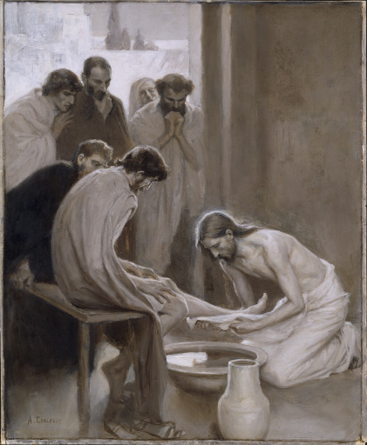
“Jesus, knowing that the Father had given all things into His hands, and that He had come from God and was going to God, rose from supper, laid aside His garments, and tied a towel around Himself. Then He poured water into a basin, and began to wash the disciples’ feet, and to wipe them with the towel that was tied around Him.” John 13: 3-5

This act causes quite a stir among the disciples. During Jesus’ time, roads in the Roman Empire, ranged from well-engineered stone highways (like the Via Maris) to rough, local dirt roads that were always dusty — and often muddy! A large basin of water was kept at the entrance to every Jewish home, so that feet could be washed before entering the home.

Normally, foot washing was delegated to the lowest ranking servant. Somehow, the disciples enter the home without having their feet washed. During the Last Supper, it is Jesus Himself who washes the feet of His friends. The disciples have come to recognize Jesus as the Messiah; and Simon Peter objects vehemently to Jesus washing his feet. But Jesus says to Peter:

“If I do not wash you, you have no part in Me.” John 13: 8

These words must have stirred Peter’s heart. Throughout His earthly ministry, Jesus has been telling the disciples and everyone else who will listen that our lives will be defined by the depth of our love for God and for each other. When a Pharisee asks Jesus which is the greatest commandment in God’s law, Jesus replies as follows:  

“And Jesus said to them, ‘You shall love the Lord your God will all your heart, and with all your soul, and with all your mind. This is the great and first commandment. And a second is like it, You shall love your neighbor as yourself. On these two commandments, depend all the law and the prophets.’” Matthew 22: 37-40

Everything — everything — depends on Love, Jesus tells us.

As Peter acquiesces and allows the Lord to wash his feet, he receives yet another profound lesson from Jesus about Love — the greatest virtue of Love is humility. Jesus shows Peter that only absolute humility enables absolute and perfect love of God and of others.

Do we fully grasp this?

St. Paul, in his first letter to the Church of Corinth, also underscores the virtue of humility as Love’s guiding force. The real power of Love lies not in our feelings or words. Rather, St. Paul describes that the power of Love is ultimately revealed in how we live and behave:

“Love is patient, and kind; love is not jealous or boastful; it is not arrogant or rude. Love does not insist on its own way; it is not irritable or resentful; it does not rejoice at wrong, but rejoices in the right. Love bears all things, believes all things, hopes all things, endures all things. Love never ends. (1 Corinthians 13: 4-8)

By washing His disciples’ feet, Jesus shows us that only when we are willing to make ourselves very small and little … only when we are willing to humble ourselves and allow someone else to be the master … can we love in the way that God intends for us to love.

Only God’s kind of Love — fueled by humility — has the power to transform souls. And as Jesus shows us, transformation occurs one soul at a time, through Love.

Our humility releases the power of God’s Love in our lives and in the lives of everyone we touch. St. Therese of Lisieux describes it this way:

“I am only a child, powerless and weak, and yet it is my weakness that gives me the boldness of offering myself as VICTIM [and channel] of Your Love, O Jesus! … In order that Love be fully satisfied, it is necessary that It lower Itself, and that It lower Itself to nothingness and transform nothingness into fire.1

After Supper, and after Judas Iscariot has left to betray the Son of God, Jesus says this to His disciples:

“A new commandment I give to you, that you love one another; even as I have loved you, that you also love one another. By this all men will know that you are My disciples, if you have love for one another.” John 13: 34-35

The hearts of Jesus’ disciples are no doubt burning so brightly. They have just witnessed Jesus wash their feet and institute the mysterious Eucharist. They have observed the betrayal of Judas and now fear what lies ahead for Jesus. The disciples’ hearts must be bursting with an indescribable love for their Friend and Teacher. In that moment, when the disciples’ hearts are most vulnerable, Jesus tenderly asks only that they love one another as He has loved them.

O, Precious Redeemer and Friend. ♥️

During these final two weeks of Lent, may we all reflect on the transformative power of loving the way that Jesus loves.

Jesus loves you so much. ♥️

“Above all things, have fervent and unfailing love for one another.” 1 Peter 4: 8

1 John Clarke, O.C.D., Story of a Soul: The Autobiography of St. Therese of Lisieux, Third Edition (Washington, DC: ICS Publications, 1996), 195.

A Love Like No Other

“And in that region there were shepherds out in the field, keeping watch over their flock by night. And an angel of the Lord appears to them, and the glory of the Lord shone around them, and they were filled with fear.

“And the angel said to them, ‘Be not afraid; for behold, I bring you good news of a great joy which will come to all the people; for to you is born this day in the city of David a Savior, who is Christ the Lord. And this will be a sign for you: you will find a baby wrapped in swaddling cloths and lying in a manger.’

“And suddenly there was with the angel a multitude of the heavenly host praising God and saying,

“Glory to God in the highest,
and on earth peace among men with
whom He is pleased!

“When the angels went away from them into heaven, the shepherds said to one another, ‘Let us go over to Bethlehem and see this thing that has happened, which the Lord has made known to us.’

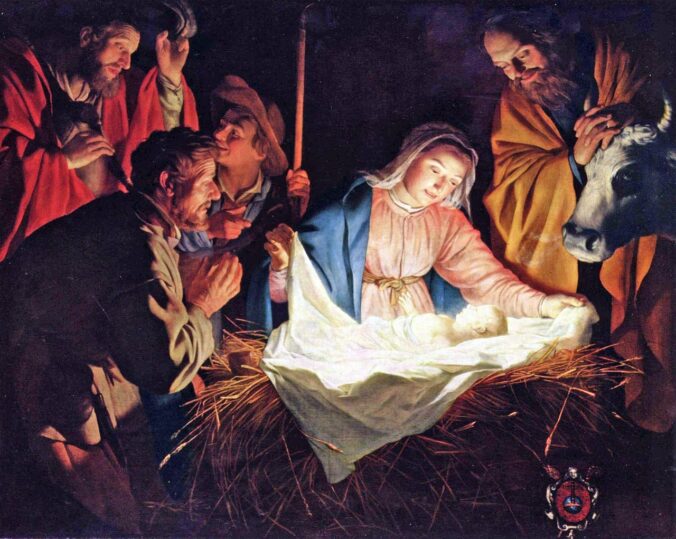
“And they went with haste, and found Mary and Joseph, and the baby lying in a manger. And when they saw it they made widely known the saying which had been told them concerning this child; and all who heard it wondered at what the shepherds told them.”
– Luke 2: 8-18

We can imagine the fear and confusion the shepherds experience when the angel appears to them. They are outside the safety of the city, tending to their sheep, in the middle of the night. First an angel of the Lord appears and speaks to them; and then a multitude of angels appear, singing and worshiping God.

Luke makes a point to say the shepherds were “filled with fear,” and rightly so! The conversation among the shepherds after the angels left must have been lively. Did an angel really speak to us? Or did we dream this? What will we find in Bethlehem?

We can also imagine the hope the shepherds feel stirring deeply within their hearts. Can it be coming true, what the prophets of old described centuries ago? Has the promised Messiah come at last?

“For to us a Child is born, to us a Son is given; and the government will be upon His shoulder; and His name will be called Wonderful Counselor, Mighty God, Everlasting Father, Prince of Peace. Of the increase of His government and of peace there will be no end, upon the throne of David, and over His kingdom, to establish it and to uphold it with justice and righteousness from this time forth and for evermore. The zeal of the LORD of hosts will do this.” Isaiah 9: 6-7

Whatever fear or uncertainty the shepherds feel during their heavenly encounter, they choose to follow the angel’s direction and go in search of the Christ child. We can imagine the wonder and joy the shepherds feel on that happy Christmas morning, when they find Mary, Joseph and the baby Jesus. The scene is exactly as the angel describes.

As the shepherds observe Mary caring for the newborn Child, they witness Jesus showing us the truth about how to receive God’s Love:

Lift up your arms to the Love that is before you. Rejoice and be glad! A Love like no other has freely entered the world. All you have to do is reach for His Love. ♥️

Merry Christmas.

“And the Word became flesh and dwelt among us, full of grace and truth; we have beheld His glory, glory as of the only-begotten Son from the Father.” John 1: 14

Jesus Came For Us

On the eve of Christ’s birth, let us remember that Jesus was born for us.

Jesus came for the one whose life seems hopeless.

Jesus came for the one who is addicted and separated from God because of sin.

Jesus came for the one who is abandoned and lonely.

Jesus came for the one who has lost faith in Him.

Jesus came for the one who is hurting and angry.

Jesus came for the one who doesn’t feel worthy of His Love.

Jesus came for the one who is spiritually weak and lame.

Jesus came for the one who is weary and longs for peace.

Jesus came for the one who doesn’t even know His Name yet.

Jesus entered our world, fully human and fully divine, because a young virgin, Mary, and her spouse, Joseph, believed in the messages of the angels and chose to place their lives completely in God’s Hands.

Jesus entered our world in a humble way, born in poverty, in a place that housed animals. Lying in a manger, Jesus received both the outcasts and the wise and powerful who came to see the Messiah. All are welcome by Jesus’ side.

Jesus came for the one who wants to know the truth about God’s love — the perfect kind of love that casts out all fear and fills hearts with grace and joy.

Jesus came for us.

“I will give thanks to the Lord, with my
whole heart;
I will tell of all Your wonderful deeds.
I will be glad and exalt in You,
I will sing praise to Your Name, O
Most High.”

“The Lord is a stronghold for the
oppressed,
a stronghold in times of trouble.
And those who know Your Name put
their trust in You,
for you, O Lord, have not forsaken
those who seek You.”
– Psalm 9: 1-2, 9-10

Precious Dreams

Each year as Christmas approaches, I enjoy listening to Enya’s album, And Winter Came. The album features a beautiful collection of songs from the Irish singer and songwriter.

One of my favorite pieces is titled, “Dreams Are More Precious.” The lyrics and a link to Enya’s inspiring song are included below.

I hear God in this song, calling us with much joy to see the incredible dream He brought to life through his Son, Jesus Christ … calling us to believe … calling us to place our own dreams in His loving arms so that He can give flight to these precious longings.

Sometimes I forget God is a dreamer too. He was the First to dream.

“Dreams Are More Precious”
by Enya

Come! See! High above.
Come! See! High in the heavens,
A new star shining bright;
Out of the darkness comes a light.

Come! Hear midnight chimes.
Come! Hear bells that are ringing.
And from some distant shore
Sounds of a journey echo on.

This is the night,
They say,
Everyone wants a dream.

This is the night,
They say,
Nothing is as it seems.

Come! Sleep! Close your eyes.
Come! Sleep! Give me your sorrow;
And I’ll keep watch for you
Until the dawn is breaking through,
Until the morning wakens you.

Come! Dream, through the night.
Come! Dream, and then tomorrow,
You’ll see your heart will know,
Dreams are more precious than gold.
© 2008 EMI Songs Ltd./EMI Blackwood Music Inc. (BMI)

“Remembering That It Happened Once”

Remembering that it happened once,
We cannot turn away the thought,
As we go out, cold, to our barns
Toward the long night’s end, that we
Ourselves are living in the world
It happened in when it first happened,
That we ourselves, opening a stall
(A latch thrown open countless times
Before), might find them breathing there,
Foreknown: the Child bedded in straw,
The mother kneeling over Him,
The husband standing in belief
He scarcely can believe, in light
That lights them from no source we can see,
An April morning’s light, the air
Around them as joyful as a choir.
We stand with one hand on the door,
Looking into another world
That is this world, the pale daylight
Coming just as before, our chores
To do, the cattle all awake,
Our own frozen breath hanging
In front of us; and we are here
As we have never been before,
Sighted as not before, our place
Holy, although we knew it not.

From Wendell Berry’s 1987 Sabbath poems.

« Older posts