In 2007, shortly after his election to the papacy in 2005, Pope Benedict XVI published a book titled, Jesus of Nazareth: From the Baptism in the Jordan to the Transfiguration.
In the book’s introduction, Pope Benedict describes that this book is in “no way an exercise of the magisterium, but is solely an expression of my personal search ‘for the face of the Lord’ (Psalm 27: 8).” (Foreword, p. xxiii)
These heart-felt words from a man who dedicated his life to God set the stage for an engaging and thought-provoking exploration of Jesus’ public ministry, including His baptism by John the Baptist, His Sermon on the Mount, the meaning of the parables, His calling of the twelve apostles, Peter’s confession and the Transfiguration.
This book is sitting near my keyboard as I write today’s post. My underlines and scribbled notes reflect how Pope Benedict effortlessly guides readers through historical-critical, Biblical and philosophical writings and perspectives. His writing compels readers to pause and think about what Jesus is trying to show humankind. The end result is a book that helps its readers to more clearly see Jesus “in light of His communion with the Father” (Foreword, p. xiv), which in turn reveals Jesus as the one path to truth and to God the Father.
One of Pope Benedict’s concerns, as he reveals in the Foreword, is that historical-critical scholarship in particular has distracted and divided us. Perhaps at times we have been so consumed by the debate that we focused more on winning the argument versus finding the answers. This distracts us from seeing and knowing Jesus as God intends — as “the Word [who] became flesh and dwelt among us, full of grace and truth … [and] the only-begotten Son from the Father.” (John 1: 14)
Is Pope Benedict suggesting that we abandon the practice of historical-critical thought and analysis? Absolutely not! Historical context and critical thinking matter immensely. When asked which is the greatest commandment in the law, Jesus said:
“You shall love the Lord your God with all your heart, and with all your soul, and with all your mind. This is the great and first commandment.” Matthew 22: 36-38
Jesus wants us to use our minds and to think deeply about what He is trying to show us.
But Pope Benedict asserts that this mental knowing cannot be a mere intellectual exercise. Knowing God with our minds must also be an experiential relationship that renews the mind to align our thoughts with God’s truths. To understand God’s Word and purposes is a process ultimately inspired and enabled by the Holy Spirit, transforming our desires and intentions to align with God’s Will.
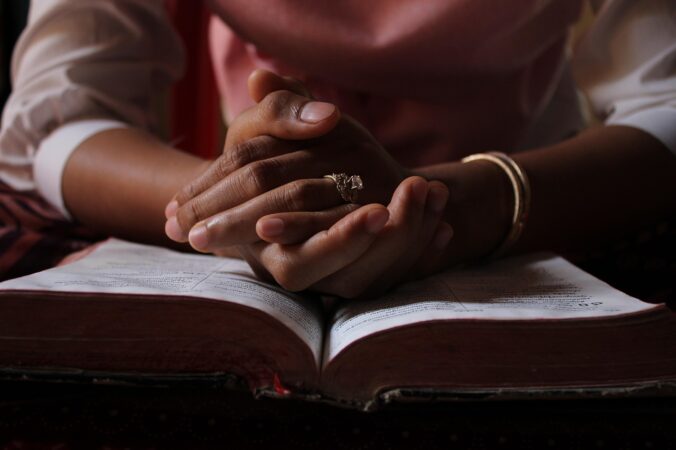
Pope Benedict reminds us that historical-critical scholarship is merely one lens through which God is revealed to us. Another essential lens for knowing Jesus is the Bible itself.
I have heard people describe that the more we read the Bible, the more the Bible begins to read us. The very breath and life of God is in those sacred pages; and when we spend time alone with God there, He reads the questions on our hearts and minds. Through the intercession of the Holy Spirit, God guides us to the Bible stories and verses that provide the answers we seek.
One thing I greatly appreciate about Pope Benedict’s book is the reminder that we do not need to be Biblical scholars to read the Bible. While there are certainly moments within his book where Pope Benedict’s exegesis or interpretation of various texts is intense, he reminds us again and again that to know God and to better understand His ways, we simply need to desire a relationship with God, through Jesus. As we cultivate this relationship, our awareness and understanding of God grows.
Pope Benedict’s book memorably demonstrates how all of this works together. I regard his book as an unexpected combination of a man’s very personal diary with an impressive study guide that challenges us to go deeper and deeper into our exploration of who Jesus was and is and will be for all time. Over and again, as Pope Benedict explores varied texts for views of Jesus, he brings us back to the Bible, encouraging us to explore this most sacred text and to form our lasting views of Jesus and His holy communion with the Father there. Through the life, death and resurrection of Jesus, God bridges the Old and New Testaments in ways that bring mercy and peace and understanding and love … and “an intimate friendship with Jesus, on which everything depends.” (Foreword, p. xxiii)
Pope Benedict XVI published two more books — Jesus of Nazareth: Holy Week: From the Entrance into Jerusalem to the Resurrection and Jesus of Nazareth: The Infancy Narratives — creating a New York Times Bestseller three-volume series.
I am incredibly grateful for all of these books.
“Lord, help me to come to know You more and more. Help me to be ever more at one with Your will. Help me to live my life not for myself, but in union with You, to live it for others. Help me to become ever more Your friend.”
– Excerpt from a homily of Pope Benedict XVI, delivered approximately 60 years after his priestly ordination.
Recent Comments