Month: July 2025

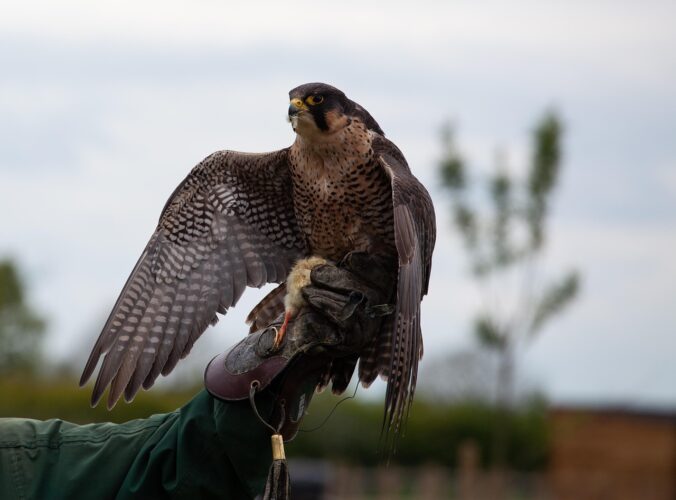
A Tethered Falcon

My heart sits on the arm of God
Like a tethered falcon
Suddenly unhooded.

I am now blessedly crazed
Because my Master’s Astounding Effulgence
Is in constant view.

My piercing eyes,
Which have searched every world
For Tenderness and Love,
Now lock on the Royal Target —
The Wild Holy One
Whose Beauty Illuminates Existence.

My soul endures a magnificent longing.

I am a tethered falcon
With great wings and sharp talons poised,
Every sinew taut, like a Sacred Bow,
Quivering at the edge of my Self
and Eternal Freedom,

Though still held in check
By a miraculous
Divine Golden Cord.

Beloved,
I am waiting for You to free me
Into Your Mind
And Infinite Being.
I am pleading in absolute helplessness
To hear, finally, your Words of Grace:
Fly! Fly into Me!

– Poem by the Medieval poet, Hafiz

Our Time to Seek

In the early 50s A.D., St. Paul visits pagan Athens. His visit is recorded in the seventeenth chapter of the Acts of the Apostles. Paul is described as being visibly provoked and saddened by the idols on display throughout the city; and he spends his days arguing with the Jews and other devout persons who wander into the synagogue and other public places.

It is no surprise that Paul catches the attention of the Epicurean and Stoic philosophers in Athens. Socrates, Plato and Aristotle are long dead, but the community of Greek philosophers and intellectuals that they inspired are curious about Paul, who is the first to preach Christianity in Athens. Not surprisingly, their views of Paul are mixed:

“Some said, ‘What would this babbler say?’ Others said, ‘He seems to be a preacher of foreign divinities’ — because he preached Jesus and the resurrection.” Acts 17: 18

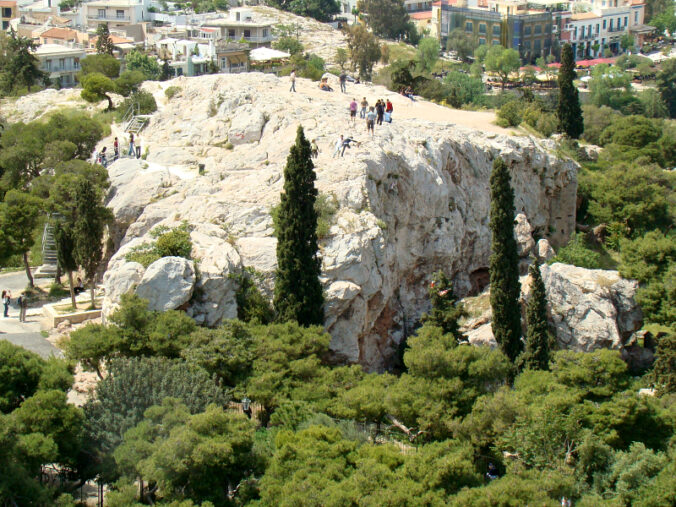
So they take Paul to the Aeropagus on Mars Hill, which is near to the Acropolis, and order him to explain in greater detail the new doctrine he is preaching. I like to imagine the scene —

Paul is standing in the middle of the rocky hill, surrounded by arguably the world’s greatest thinkers. Paul’s bold aim is to expose the fallacies of their decision to worship “an unknown god.” (Acts 17: 23) Interestingly, Socrates, the founder of Western philosophy and a pioneer of moral philosophy, was tried for his beliefs and sentenced to death on this same hill, almost five centuries earlier, in 399 BC.

Here is an excerpt from St. Paul’s memorable speech:

“Men of Athens, I perceive that in every way you are very religious. For as I passed along, and observed the objects of your worship, I found also an altar with this inscription, ‘To an unknown god.’

“What therefore you worship as unknown, this I proclaim to you. The God who made the world and everything in it, being Lord of heaven and earth, does not live in shrines made by man, nor is He served by human hands, as though He needed anything, since He Himself gives to all men life and breath and everything.

“And He made from one every nation of men to live on all the face of the earth, having determined allotted periods and the boundaries of their habitation, that they should seek God, in the hope that they might feel after [or reach out to] Him and find Him.

“Yet He is not far from each one of us, for ‘In Him, we live and move and have our being;’ as even some of your poets have said, ‘For we are indeed His offspring.'” Acts 17: 22-28

As Paul’s words settle on my mind and heart, I picture myself on that hill in Athens, alongside all the others who are searching for answers. For some of us, there are still lots of questions and we feel uncertain, so we want to hear more of what Paul has to say. Some of us feel that we have strayed from our purpose in life — in fact on this particular day, we are no longer confident that we even have a purpose. Some days, God feels so distant from us. At least we like to think that God is distant because it lessens the inexplicable pull on our hearts to reach out to Him for His friendship and guidance.

However at Paul’s feet, we are reminded of the truth of God’s nearness. We see that God wants to answer the questions on our hearts and our minds. While we may not be able to see how the things we are worried about will turn out, we suddenly understand that we are exactly in the time and place that God has willed for us, and we are surrounded by the people we need.

We are reminded that God longs for us to search for and to know Him. It’s why He created us — to live in relationship with Him forever. We recognize again the truth of one God, our Father, who desires only to fill us with the love and joy and purpose that He has dreamed for each one of us. He loves us more than we can ever imagine.

The Bible describes that at the end of Paul’s speech, some in the crowd mocked him. Others indicated that they wanted to hear more from him. Others joined Paul and believed.

Dear Lord, please inspire all of us who are reading Paul’s words to follow your faithful servant off that hill. O Holy Spirit, create in all of us a deep and unquenchable thirst to learn more and more about God through sacred Scripture. Dear God, our Father, help us to encourage and love one another, so that we may all know You here on earth and see You in heaven.

This is our time to seek and to find and to know God.

Jesus assures us that if we seek God, we will certainly find Him. (Matthew 7: 7)

“The Lord appeared to us in the past, saying: ‘I have loved you with an everlasting love; I have drawn [or created] you with an everlasting love.'” Jeremiah 31: 3

Note: Photo by O. Mustafin, courtesy of Wikipedia.

The Wolf of Gubbio

There is a beautiful legend about St. Francis, a Wolf, and the village of Gubbio.

Gubbio was a prosperous village in Italy that, for awhile, found itself under siege of a Wolf. The Wolf was killing both the livestock and citizens of Gubbio. Everyone was on edge, so the mayor sent his advisors to find and meet with Francis of Assisi. The mayor and his advisors had heard that Francis could speak with animals and that he also talked with God.

Francis met with the mayor’s men and was filled with much empathy for their situation. He returned to Gubbio with them and after spending some time with the mayor, Francis decided to search for and meet with the Wolf. His goal was to find a solution to this problem that worked for everyone, including the Wolf.

Within hours of leaving the village, Francis came face to face with the Wolf. The legend teaches that Francis and the Wolf immediately began to communicate with one another. After realizing that Francis meant him no harm, the Wolf described how his pack had deserted him because of a leg injury that prevented him from keeping up with the others. The Wolf could only chase slow-moving prey, hence his attacks on livestock. The Wolf also explained that he had killed villagers who had threatened his life in some way.

Francis astutely observed that the Wolf carried as much fear as the citizens of Gubbio, enabling him to conceive a solution to the problem: The Wolf would return with Francis to the village. The citizens would provide the Wolf food, meeting his needs for sustenance. In return, the Wolf would live peacefully within the village, helping to guard the citizens and to meet their needs for security. The Wolf accepted the plan by placing his paw gently in Francis’ outstretched hand.

When St. Francis and the Wolf returned to Gubbio, they were met by citizens filled with fear and sadness. Was the Wolf truly tamed? Would he remain gentle if they fed him? And could those villagers who had lost loved ones find it in their hearts to forgive the Wolf?

The Wolf was on edge as well. He trusted Francis, but could he trust the villagers? Would they be able to forgive him and be willing to feed him? What if they surrounded him and tried to kill him after Francis left? With his injury, the wolf would not be able to escape the confines of the village.

But with Francis as an empathetic and peaceful mediator, the citizens and the Wolf acknowledged and let go of their fears. They let go of the past, each forgiving the other their trespasses. The legend teaches that the Wolf lived peacefully within the village of Gubbio for another two years before he died, loving the citizens who cared for and loved him in return.

This legend always stirs my heart. At first glance, the obstacles to peace seem obvious. For the citizens of Gubbio, the Wolf is the transgressor, wantonly killing their livestock and fellow citizens. For the Wolf, the citizens are the transgressors, standing between him and his food and randomly threatening him.

But the obstacles to genuine and lasting peace are rarely so obvious. In the legend, St. Francis shows us that the real obstacle to peace resides within the hearts of the citizens of Gubbio and of the Wolf. The obstacle to their shared peace is fear — the fear of not having enough, the fear of being misunderstood, the fear of being duped, the fear of making a bad decision, the fear of dying.

Fear is a terrible thing for all of us. Fear, by its nature, is so often an emotional or irrational response that separates us from God and from others. In fact St. Francis once said, “By the anxieties and worries of this life, Satan tries to dull man’s heart and make a dwelling for himself there.”

Fear is not from God. God is Love, and the Bible plainly tells us that in God’s perfect love there is no fear. (1 John 4: 18)

God wants us to move beyond fear. The phrase “do not be afraid” and similar expressions of encouragement appear at least 365 times throughout the Bible — a daily reminder from God about the debilitating effects of fear on our shared sense of peace and wellbeing.

The legend of the Wolf of Gubbio offers an important lesson about the need to be aware of the demons that we can see — and of the demons and fears that reside within our hearts.

The legend also reminds us that only God’s grace can help us to understand the things that we fear and to see how fear affects our behaviors and decisions. If we ask God to, He can and will tame those demons that threaten the peacefulness of our hearts.

St. Francis shows us that peaceful hearts are powerful hearts. Hearts filled with God’s peace provide the clarity and courage to offer solutions that can bring lasting peace to others as well.

When your fears rise up, immediately place them before God. Do not let your hearts be troubled. God will bring you a peace like no other. (John 14: 27)

“Dear God, please reveal to us Your sublime beauty that is everywhere, everywhere, everywhere, so that we will never again feel frightened.” St. Francis of Assisi

Through an Open Gate

O Greatly Merciful God, Infinite Goodness,
today all mankind calls out from the abyss
of its misery to Your Mercy —
to Your compassion, O God …

O Lord, goodness beyond our understanding,
Who are acquainted with our misery through and through,
and know that by our own power
we cannot ascend to You,
we implore You:

Anticipate us with Your grace and keep on increasing
Your Mercy in us,
that we may faithfully do Your Holy Will
all through our life
and at death’s hour. …

For Jesus is our Hope:
Through His Merciful Heart,
as through an open gate,
we pass through to heaven.1

1Saint Maria Faustina Kowalska, Diary of Saint Maria Faustina Kowalska: Divine Mercy in My Soul (Massachusetts: Marian Press, 2020), Verse 1570, pages 557-558.

The Final Chapters of Revelation

Sometimes, when I read the Book of Revelation, I try to imagine John’s face as he records these visions from Jesus. Most scholars today think that the Book of Revelation was written around the year A.D. 95 and during the reign of the Roman Emperor Domitian, when many early Christians were persecuted for their beliefs. In fact John plainly describes being exiled on the island of Patmos “on account of the Word of God and the testimony of Jesus” (Revelation 1: 9-11) when he receives these visions.

At that time, Jesus has been gone for roughly six decades. We can imagine how much John misses his beloved friend and teacher. Perhaps there are days when John wonders, Jesus, where are you? Why is it taking so long to restore the Kingdom of God? Will I see you return in my lifetime?

And then the Risen Jesus appears to John, asking him first to share some prophetic messages with the seven churches of Asia Minor; and then sharing a series of visions that further reveal to John — and to all of us — the present and future circumstances of God’s people.

I imagine the awe and wonder on John’s face as he works to record these visions and messages from Jesus. I imagine John writes around the clock, while the details of what he has seen and heard are still fresh in his mind and heart. Whether he is addressing the seven churches in Asia, describing the beasts and plagues, or observing the endless worship of the holy beings and spirits that surround the throne of God, John writes with great conviction and love.

In Chapter 4, John describes seeing “in heaven, an open door!” (Revelation 4: 1) John is invited into heaven; and in Chapter 5, John describes seeing “in the right hand of Him who was seated on the throne a scroll written within and on the back, sealed with seven seals.” (Revelation 5: 1) When an angel asks who is worthy of opening the seal, John describes himself weeping when he observes that “no one in heaven or on earth or under the earth was able to open the scroll or look into it.” (Revelation 5: 2-4) At this moment, John realizes how far humanity has fallen from God’s original plan for us.

But then Jesus, the Lion of Judah, appears as a Lamb, standing as though it had been slain, and opens the ancient and timeless scroll and seals of God the Father. (Revelation Chapters 5 and 6). I like to think again about John’s face when he recognizes his Savior and friend in heaven. Jesus is still here … His promises are real.

I also like to imagine the great joy and love that Jesus experiences in revealing to John the new heaven and earth. Jesus loves us so much. The battle of good and evil has been fought, and The Good Shepherd has won the battle. Love always wins.

In Chapters 21 and 22 of Revelation, Jesus, through John, reveals a glimpse of eternal life with God, bringing the Old Testament prophecies full circle and confirming God’s desire to dwell with us for eternity, as per God’s original plan revealed at the start of the Bible — We are made in God’s image (Genesis 1: 26-27), which John himself assures us is Love. (1 John 4: 16) We are made in love to love one another (Genesis 2: 18-25); and we are made to love and to be with God. (Genesis 3: 8-9)

No matter how many times I read these verses in Genesis Chapter 3, I am always stunned to realize that Adam and Eve knew the sound of God’s footsteps in the garden. They knew the sound of His Voice and that God enjoyed walking in the cool of the day.

God is with us. ♥️

All is not lost. ♥️

Let the wonder of all this settle on your heart as you read John’s description of the new heaven and earth:

“Then I saw a new heaven and a new earth; for the first heaven and the first earth had passed away, and the sea was no more. And I saw the holy city, new Jerusalem, coming down out of heaven from God, prepared as a bride adorned for her husband; and I heard a great voice from the throne saying, ‘Behold, the dwelling of God is with men. He will dwell with them, and they shall be His people, and God Himself will be with them; He will wipe away every tear from their eyes, and death shall be no more, neither shall there be mourning nor crying nor pain any more, for the former things have passed away.” Revelation 21: 1-4

I imagine John’s eyes filling with tears and his fingers trembling as he writes. He goes on to recount:

“And He who sat upon the throne said, ‘Behold, I make all things new.’ Also He said, ‘Write this, for these words are trustworthy and true.’ And He said to me, ‘I am the Alpha and the Omega, the beginning and the end. To the thirsty I will give water without price from the fountain of the water of life. He who conquers shall have this heritage, and I will be His God and he shall be my son.” Revelation 21: 5-6

In Chapter 21, John also describes the exquisite beauty of the new holy city of Jerusalem, revealed to him by one of the seven angels introduced at the start of Revelation. The new Jerusalem is built with pure gold and adorned with the earth’s most precious jewels. Reiterating again God’s plan to dwell with us, John writes this:

And I saw no temple in the city, for its temple is the Lord God the Almighty and the Lamb. And the city has no need of sun or moon to shine upon it, for the glory of God is its Light, and its lamp is the Lamb. By its light, the nations walk; and the kings of the earth shall bring their glory into it, and its gates shall never be shut by day — and there shall be no night there; they shall bring into it the glory and the honor of the nations.” Revelation 21: 22-26

John continues:

“Then he [the angel] showed me the river of the water of life, bright as crystal, flowing from the throne of God and of the Lamb through the middle of the street of the city; also, on either side of the river, the Tree of Life, with its twelve kinds of fruit, yielding its fruit each month; and the leaves of the tree were for the healing of the nations.” Revelation 22: 1-2

The enormity of these visions are revealed through John’s words near the end of Revelation:

“I John am he who heard and saw these things. And when I heard them, I fell down to worship at the feet of the angel who showed them to me; but he said to me, ‘You must not do that! I am a fellow servant with you and your brethren the prophets, and with those who keep the words of this book. Worship God.’ And he said to me, ‘Do not seal up the words of the prophecy of this book, for the time is near. Let the evildoer still do evil, and the filthy still be filthy, and the righteous still do right, and the holy still be holy.'” Revelation 22: 8-11

I imagine John, filled with deep humility and gratitude, at the feet of the angel. And I imagine John, at the angel’s instruction, jumping up and not wasting a minute in recording what he has seen and heard! The ego and complacency that Jesus warns the churches of so sternly at the start of Revelation are nowhere to be found within John’s response.

When recording these visions, John likely has no way of knowing that the Book of Revelation will become the final book of the Bible. We know that every word of the Bible and the placement of every Book is there for a reason. Through Revelation, perhaps Jesus is trying to remind us, one last time, not to get lost in trying to figure out all the mysteries of this life, and of the life with Him to come. Perhaps Jesus is asking us one last time to accept the fact that there are questions for which there will be no answers.

Perhaps Jesus is asking us to consider, one last time, the importance of our choices made here on earth.

And perhaps Jesus is assuring us that if we desire to share eternal life with Him, all we have to do is trust in and listen for and follow Him.

At the end of Revelation, Jesus says these words:

“‘I Jesus have sent my angel to you with this testimony for the churches. I am the root and the offspring of David, the bright morning star.'” Revelation 22: 16

Carry this image of Jesus with you always — “the bright morning star,” leading you to a peace and love like no other.
♥️