Month: June 2025

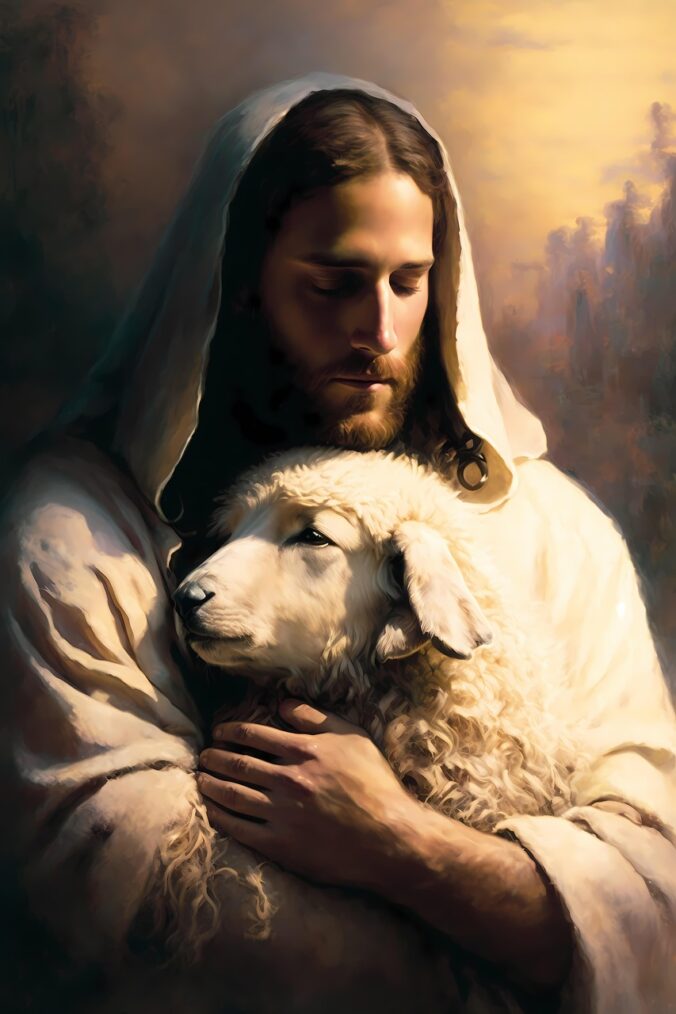
The King of Love

Below are the lyrics to a beautiful Christian hymn written by Anglican priest and hymnist Sir Henry Williams Baker in 1868. The hymn is based on Psalm 23; and Sir Henry is said to have spoken the words in the third stanza as his last words before dying. Click here to enjoy a soulful rendition of the hymn recorded live at St. Francis de Sales Church in Ajax, Ontario, Canada.

The King of Love my shepherd is,
Whose goodness fails me never;
I nothing lack if I am His,
And He is mine forever.

Where streams of living water flow,
With gentle care He leads me,
And where the verdant pastures grow,
With heav’nly food He feeds me.

Perverse and foolish I have strayed,
But yet in love He sought me.
And on His shoulder gently laid,
And home, rejoicing, brought me.

In death’s dark vale, I fear no ill,
With you, dear Lord, beside me.
Your rod and staff my comfort still,
Your cross before to guide me.

You spread a table in my sight,
Your saving grace bestowing.
And O what joy and true delight,
From Your pure chalice flowing!

And so through all the length of days,
Your goodness fails me never.
Good Shepherd, may I sing your praise,
Within Your house forever.


The Mark of Faith

Within the Book of Revelation, John records seeing people who are “marked” with signs of their goodness and faithfulness, and people who are marked with signs of their disbelief in God and all of His ways.

Chapter 13 opens with John describing a beast rising up out of the sea and another rising up from the earth. (Revelation 13: 1-4, 11-12) These beasts represent the evil forces and false prophets of the world. John observes these beasts uttering blasphemies against God, making war on the saints, and deceiving humanity by the signs they are allowed to work. (Revelation 13: 6-7, 14)

People are being tested in the presence of evil; and as the living make their decisions about what to believe and who to follow, one of the beasts requires humanity to be marked as follows:

“It [the beast] causes all, both small and great, both rich and poor, both free and slave, to be marked on the right hand or the forehead, so that no one can buy or sell unless he has the mark, that is, the name of the beast or the number of its name. This calls for wisdom: let him who has understanding reckon the number of the beast, for it is a human number, its number is six hundred and sixty-six.” Revelation 13: 16-18

In Chapter 14, John describes seeing those who are marked by their faith in Jesus and in God the Father:

“Then I looked, and behold, on Mount Zion stood the Lamb, and with Him a hundred and forty-four thousand who had His name and His Father’s name written on their foreheads. And I heard a voice from Heaven like the sound of many waters and like the sound of loud thunder; the voice I heard was like the sound of harpists playing on their harps, and they sing a new song before the throne and before the elders. No one could learn that song expect the hundred and forty-four thousand who had been redeemed from the earth.” Revelation 14: 1-3

This concept of “marking” both symbolizes and affirms the final judgment of all souls in their encounter with Christ, upon their death. The Catechism of the Catholic Church teaches the following:

“Death puts an end to human life as the time open to either accepting or rejecting the divine grace manifested in Christ. The New Testament speaks of judgment primarily in its aspect of the final encounter with Christ in His second coming, but also repeatedly affirms that each will be rewarded immediately after death in accordance with his works and faith. The parable of the poor man Lazarus and the words of Christ on the cross to the good thief, as well as other New Testament texts speak of a final destiny of the soul — a destiny which can be different for some and for others.” CCC, 10211

Within the story of Revelation, we see Jesus and God the Father and the angels and saints observe the chaos unfolding on earth and the decisions made by the living. They observe but do not intervene in these decisions. John’s writing here, rich in symbolic imagery, is confirming that the decision to follow Christ is wholly ours to make.

God created us in His own image (Genesis 1: 26-27), which is Love (1 John 4: 16). Love can never be forced. Love sets us free and empowers us to create more goodness. And while the presence of sin in the world threatens to enslave us in its empty promises, Jesus shows us the way around sin and to eternal life. St. Paul describes it this way:

“For freedom Christ has set us free; stand fast therefore, and do not submit again to a yoke of slavery … For you were called to freedom, brethren; only do not use your freedom as an opportunity for the flesh, but through love be servants of one another.” Galatians 5: 1, 13

How do we follow Christ to eternal life? Shortly before His betrayal, Jesus says this to his apostles:

“[And Jesus said], ‘A new commandment I give to you, that you love one another; as I have loved you … By this all men will know that you are my disciples, if you have love for one another.'” John 13: 34-35

And when asked which of God’s commandments are the greatest, Jesus replies:

“And Jesus said to him, ‘You shall love the Lord Your God with all your heart, and with all your soul, and with all your mind. This is the first and greatest commandment. And a second is like it, You shall love your neighbor as yourself.'” Matthew 22: 37-39

The key to eternal life with God is Love. ♥️

As John’s story in Revelation reminds us, we will face trials in our lives. But cultivating a relationship with God enables us to put our faith and hope in His way of living and loving regardless of what happens. God’s kind of love is not merely an emotional response to Him and to the people we encounter on earth. God’s kind of love is a very active thing. It’s about being willing to sacrifice things, big and small, for those we love. It’s about choosing to love when things are going really well and when it seems that all is lost.

St. Paul describes the way of God’s love:

“Love is patient and kind; love is not jealous or boastful; it is not arrogant or rude. Love does not insist on its own way; it is not irritable or resentful; it does not rejoice at wrong but rejoices in the right. Love bears all things, believes all things, hopes all things, endures all things. Love never ends.” 1 Corinthians 13: 4-8

The mark of the faithful is Love. ♥️

St. John of the Cross once said, “At the evening of life, we shall be judged on our love.”  

We do not have to worry about whether we have what it takes to love like Jesus loves. All we have to do is walk through the open door that Jesus places before all of us and choose to follow Him. Day by day … moment by moment … Jesus will give us everything we need to love and live as He does.

Remember Jesus’ words to us in Revelation:

“[And Jesus said,] ‘Behold, I have set before you an open door, which no one is able to shut; I know that you have but little power, and yet you have kept My Word and have not denied My Name … Because you have kept My Word of patient endurance, I will keep you from the hour of trial which is coming on the whole world, to try those who dwell upon the earth.'” Revelation 3: 8, 10

If we desire to live and love like Jesus, and to spend eternal life with Him, He will give us everything we need to do that.

It is beautiful how all of this works together.

Thank you, Jesus, for loving us so much.

1Catholic Church, Catechism of the Catholic Church: Revised in accordance with the official Latin text promulgated by Pope John Paul II, Ascension Edition (Pennsylvania: Ascension Publishing Group, LLC, 2022), Paragraph 1021, page 284.

Sacred Heart on Fire

Continuing through the Book of Revelation, the middle chapters — in particular, Chapters 6, 8-9, and 15-18 — recount various devastations and plagues being released upon the earth, thus ushering in the second coming of Christ. Revelation was written by John, beloved apostle and friend of Jesus; and this Book recounts John’s vision of Heaven and the second coming of Jesus.

It’s easy to get lost in the imagery that John records — the imagery is difficult and tragic and confusing at times. There is a great earthquake (Revelation 6: 12) and the stars of the sky fall to the earth (Revelation 6: 13). People on earth scatter and hide in caves and among the rocks; and beg to be hidden from “the wrath of the Lamb.” (Revelation 6: 15-17)

As the story continues, powerful angels, blowing their trumpets, unleash continued woes upon the earth. Hail and fire, mixed with blood, fall to the earth; “and a third of the earth was burnt up, and a third of the trees were burnt up, and all green grass was burnt up.” (Revelation 8: 7) At one point, “a third of the sun was struck, and a third of the moon, and a third of the stars, so that a third of their light was darkened; a third of the day was kept from shining, and likewise a third of the night.” (Revelation 8: 12) Locusts are released from a bottomless pit. They look like horses, “arrayed for battle;” (Revelation 9: 7) and “they have tails like scorpions, and stings, and their power of hurting men for five months lies in their tails.” (Revelation 9: 10)

In Chapter 18, John records the fall of Babylon. Babylon could be a direct reference to pagan Rome; but broadly, it can be viewed here as a reference to any power, imperial or otherwise, that renounces Christian religion and its beliefs:

“Fallen, fallen, is Babylon the great! It has become a dwelling place of demons, a haunt of every foul spirit, a haunt of every foul and hateful bird … In one hour has your judgment come … The fruit for which your soul longed has gone from you, and all your delicacies and your splendor are lost to you, never to be found again!” (Revelation 18: 2, 10, 14)

I am sharing in this post just a few of the woes and events recorded by John in Revelation. In the midst of this imagery, there are also observations by John that are amazingly simple and clear. For instance:

“The rest of mankind, who were not killed by the plagues, did not repent of the works of their hands nor give up worshiping demons and idols of gold and silver and bronze and stone and wood, which cannot either see or hear or walk; nor did they repent of their sorceries or their immorality or their thefts.” Revelation 9: 20-21

It seems impossible to conceive that in this final fight between good and evil — when death and chaos are everywhere and the end is near — that John observes people still unwilling to leave behind their sins. How can this be? And how can God let His beloved people wallow and wither in sin? Isaiah provides some perspective:

“Behold, the Lord’s hand is not shortened, that it cannot save, or His ear dull, that it cannot hear; but your iniquities [or immoral behavior] have made a separation between you and your God, and your sins have hidden His face from you so that he does not hear.” Isaiah 59: 1-2

Isaiah has captured the devastation of sin — it separates us from God so that we can no longer hear His voice.

We’ve all heard the phrase, “We reap what we sow.” The phrase is based on these verses from Galatians:

“Do not be deceived: God is not mocked, for whatever a man sows, that will he also reap. For he who sows to his own flesh will from the flesh reap corruption; but he who sows to the Spirit will from the Spirit reap eternal life.” Galatians 6: 7-8

St. Paul is the author of these words to the Galatians. He is reminding us that choosing to be ruled by our flesh and our emotions leads to sinful living. Looking with fresh eyes again at Revelation 9: 20-21, we understand that the eternal danger we face is becoming so lost in the hypocrisy and lies and lawlessness of sin left unchecked that we can no longer see or hear what is True and Good — We can no longer see or hear God.

But all is not lost, for we have the gift of the Book of Revelation.

What I relish about Revelation is that it slows me down — way down. John’s writing makes me reflect deeply on how I am living. This reflection matters because it’s the only way any of us can truly understand where and how our sinfulness is impacting how we love — and how we are loved by others.

St. Paul reminds us in Romans that all of us have sinned and fallen short of the glory of God. (Romans 3: 23) And within Revelation, John is showing us the devastating consequences of sin. Despite what the modern world and our own emotions may try to tell us, John is telling us that Hell is a very real thing:
Hell is eternal separation from God.

St. Paul reminds us that all is not lost:

“[We] are justified by His grace as a gift, through the redemption which is in Christ Jesus, whom God put forward as an expiation by His blood, to be received by faith.” (Romans 3: 24-25)

John, the beloved apostle and friend of Jesus, shares these words earlier in the New Testament:

“If we confess our sins, He is faithful and just to forgive us our sins and to cleanse us from all unrighteousness.” (1 John 1: 9) “For God so loved the world that He gave His only begotten Son, Jesus, that whoever believes in Him should not perish but have eternal life.” (John 3: 16)

It is uncomfortable to read many parts of Revelation. If we are honest with ourselves, we all find pieces of our lives there that fall short of God’s plans of goodness for us. And yes, the fierce imagery of John’s vision burns heavily on our hearts and minds.

But more and more, I also see clearly within John’s imagery the Sacred Heart of Jesus on fire with His love for us. Through John, Jesus is trying to tell us that our choices here on earth matter. The words and images are dramatic, but Jesus is fighting for our souls.

The wonder of it all is so beautiful to contemplate.

Jesus loves you deeply.

Do not let any thing — or any person — ever separate you from His Love.

Before Jesus was arrested, He prayed these words to His Father in Heaven, pleading with God for His disciples and for all others who will believe in Him through their testimony:

“‘Father, I desire that they also, whom You have given Me, may be with Me where I am, to behold My glory which You have given Me in your love for Me before the foundation of the world.'” John 17: 24

God Loves Us So Much

Some imagery of the Book of Revelation — the plagues and the devastation — can be difficult to contemplate. How could God unleash such wrath over humanity?

But this devastation and separation from God was never His plan for us. The Bible opens with these words:

“In the beginning God created the heavens and the earth … Then God said, ‘Let us make man in our image, after our likeness;’ … so God created man in His own image, in the image of God He created him; male and female He created them. And God blessed them … And God said, ‘Behold, I have given you every plant yielding seed which is upon the face of the earth, and every tree with seed in its fruit; you shall have them for food … And God saw everything that He had made, and behold, it was very good.” Genesis 1: 1, 26-29, 31

We are made in God’s image, which is Love (1 John 4: 16) — we are made in Love and to love. Regardless of whether we view the creation story in Genesis as an allegory, we cannot overlook the symbolism and spiritual truths that the words of this narrative convey — most importantly, that God was with us in the beginning. He was so close to the man and woman that they knew the sound of His footsteps and voice:

“And they [the first man and woman] heard the sound of the Lord God walking in the garden in the cool of the day, and the man and his wife hid themselves from the presence of the Lord God among the trees of the garden. But the Lord God called to the man and said to him, ‘Where are you?'” Genesis 3: 8-9

This scene occurs after The Fall, when the man and woman choose to disobey God, launching the tragic history of sin and its devastating consequences.

God is still with us today and will be with us when the world as we know it ends. Jesus tells this to His eleven disciples, after His Resurrection. (Matthew 28: 16-20)

When I read now from Revelation, I am aware more and more of God’s immense sorrow for those of us who choose to separate from Him. God never intends to separate from any of us. Nor does He desire that we suffer death or any other difficulties.

Rich Mullins, an American contemporary Christian music singer and songwriter, wrote the beautiful poem below. It’s how I think of God:

I am thinking now of old Moses: sitting on a mountaintop — sitting with God — looking across the Jordan into the Promised Land. I am thinking of the lump in his throat, that weary ache in his heart, that nearly bitter longing sweetened by the company of God…

Of God, on whose breast old Moses lays His head like John the beloved would lay his on the Christ’s. And God sits there quietly with Moses — for Moses — and lets His little man cry out his last moments of life.

And then God — the great eternal God — takes Moses’ thin-worn, threadbare little body into His hands — hands into whose hollows you could pour the oceans of the world, hands whose breadth marked off the heavens — and with these enormous and enormously gentle hands, God folds Moses’ pale, lifeless arms across his chest for burial.

I don’t know if God wept at Moses’ funeral. I don’t know if He cried when He killed the first of His creatures, to take its skins to clothe this man’s earliest ancestors. I don’t know who will bury me …

But I look back over the moments of my life and see the hands that carried Moses to his grave lifting me out of mine. In remembering, I go back to these places where God met me and I met Him again and I lay my head on His breast, and He shows me the land beyond the Jordan and I suck into my lungs the fragrance of His breath, the power of His presence.1 

God loves us so much.  

1©2017 Goodreads Inc. https://www.goodreads.com/quotes/431738-i-am-thinking-now-of-old-moses-sitting-on-a

An Uncompromising Love

I have been reading again the Book of Revelation, which was written by John, the beloved apostle and friend of Jesus. This Book recounts John’s vision of Heaven and the second coming of Christ — portraying the destruction of the world as we know it, and the ultimate triumph of good over evil.

The Book of Revelation is rich and varied in content. Some elements of John’s story read much like a fantasy adventure! For instance, John describes seeing creatures in Heaven that are both awe-inspiring and frightening. There are the four living creatures, gathered all around and on each side of the throne of Heaven, ceaselessly guarding and worshiping this holy and sacred place:

“Full of eyes in front and behind: the first living creature like a lion, the second living creature like an ox, the third living creature with the face of a man, and the fourth living creature like a flying eagle. And the four living creatures, each of them with six wings, are full of eyes all round and within, and day and night they never cease to sing, ‘Holy, holy, holy, is the Lord God Almighty, who was and is and is to come!'” Revelation 4: 6-8

There is the dragon waiting to devour the child of “a woman clothed with the sun, with the moon under her feet, and on her head a crown of twelve stars.” (Revelation 12: 1) The woman is in labor and about to deliver a child:

“Behold, a great red dragon, with seven heads and ten horns, and seven diadems upon his heads. His tail swept down a third of the stars of heaven, and cast them to the earth. And the dragon stood before the woman who was about to bear a child, that he might devour her child when she brought it forth.” Revelation 12: 3-4

At one point, a war breaks out in Heaven, as St. Michael the Archangel and his angels fight the dragon that is threatening the woman. (Revelation 12: 7-12) Much of the middle chapters of Revelation — in particular, Chapters 6, 8-9, 13, and 15-18 — recount various devastations and plagues being released upon the earth, as God empties His final wrath and deep sorrow for the sins of humankind.

Other elements of the text are simple and straightforward. John opens by plainly telling us that he is a “witness to the Word of God and to the testimony of Jesus Christ.” (Revelation 1: 2) John states that he has seen a vision of the Risen Jesus and that he has been instructed by Jesus to write down what he has heard and seen. (Revelation 1: 9-20)

John first shares a message from Jesus, to the seven churches of Asia Minor. (Revelation Chapters 2 and 3) It is both amazing and heartbreaking to read and think about what Jesus is saying to the Churches, through John. Each of the seven messages appear fully in red ink, denoting that these are the words of Jesus Himself. His words are timeless — as relevant to us today as they were to the early followers of the Church.

Every single word of the Bible is inspired by God, so that we may be equipped for good lives. (2 Timothy 3: 16-17) Because of this, we can deduce that even the placement of various Books in the Bible is inspired by God. So we should not take lightly that God closes the Bible with a final warning that the world as we know it will end some day, and that a final judgment for all of us is certain.

Nor should we take lightly these final words of guidance, from the Risen Jesus, about how to persevere and grow as believers. With an uncompromising Love, Jesus is preparing us for the final judgment of God the Father.

Jesus first addresses the Church in Ephesus, and while it seems that the followers there are working hard to keep the faith, Jesus warns them to not become complacent in their love for Him:

“‘But I have this against you, that you have abandoned the love you had at first.'” Revelation 2: 4

A message to the Church in Pergamum warns against becoming complacent or numb to the danger of false teachings:

“‘You have some there who hold the teaching of Balaam, who taught Balak to put a stumbling block before the sons of Israel, that they might eat food sacrificed to idols and practice immorality. So you also have some who hold the teaching of the Nicolaitans. Repent then. If not, I will come to you soon and war against them with the sword of My mouth.'” Revelation 2: 14-16

To the Church of Thyatira, Jesus warns against the community’s tolerance of a prophetess who is teaching and encouraging immorality — reminding all of us to guard our minds and hearts against a loss of the awareness of good and evil:

“‘Behold, I will throw her on a sickbed, and those who commit adultery with her I will throw into great tribulation, unless they repent of her doings; and I will strike her children dead … And all the Churches shall know that I am He who searches mind and heart, and I will give to each of you as your works deserve.'” Revelation 2: 22-23

To the Church in Sardis, Jesus urges His followers to avoid complacency and pride:

“‘I know your works; you have the name [or public perception] of being alive [in your faith], and you are dead. Awake, and strengthen what remains and is on the point of death, for I have not found your works perfect in the sight of My God. Remember then what you have received and heard; keep that, and repent. If you will not awake, I will come like a thief and you will not know at what hour I will come upon you.'” Revelation 3: 1-3

There are many other meaningful words of counsel in these messages to the Churches. Chapters 2 and 3 are worth reading over and over. I am focusing here on Jesus’ warning to not become complacent or prideful in our love for Him.

Complacency and pride are dangerous things, when it comes to our faith. And unfortunately, these things seem to go hand-in-hand:

I’m good with God. I don’t need to spend so much time studying the Bible …

I don’t need to spend time alone with Him every day; God knows I love Him …

I’ve been so busy with work and the kids. I don’t think God will mind if I miss Mass …

My life is really starting to turn around. I don’t need to wait for guidance from Jesus about what to do next. I’ve got this …

I know I shouldn’t do this or that, or hang out so much with these friends, but it’s fun to just let go and forget about life every now and then. I’ll worry about tomorrow, tomorrow!

Do any of these words sound as familiar to you as they do to me?

The problem with complacency and pride is that when we open the door to these behaviors, they begin to grow and take root in our hearts. If we’re not careful, they grow like weeds, choking out our desire to continue learning and growing in our relationship with God.

Pride and slothfulness (or complacency) are two of the deadly sins. C.S. Lewis famously described pride as “the anti-God.” And I am guessing you are familiar with this Proverb — “Pride goes before destruction, and a haughty spirit before a fall.” (Proverbs 16: 18)

Saint Thomas Aquinas aptly described complacency as the aimless “tendency to wander.” Within this context, complacency is a lukewarm approach to living life with Jesus. In His message to the Church of La-odicea, Jesus does not mince words about what will happen to those of us who are lukewarm in our faith:

“‘I know your works: you are neither cold nor hot. Would that you were cold or hold! So, because you are lukewarm, and neither cold nor hot, I will spew you out of My mouth.'” Revelation 3: 15-16

These are strong words. Whenever we feel this emotion from Jesus, we know that He is really wanting us to focus on His words. He loves us so much. Jesus knows how easy it is for us to become complacent … and to let things slide a little. He observes that our egos are constantly at work, comparing and assimilating — and assuring us that we have things “all figured out.”

In the opening chapters of Revelation, Jesus is plainly warning us to avoid pride and complacency. He is calling us to reflect on how we are living our lives, and to be honest about where we can make some improvements.

It matters that we try to be a little bit better each day. As we look back over the years of our lives, it matters that we can see how we have grown in our faith.

Jesus is with us and wanting to help us:

“‘Fear not, I am the first and the last, and the Living One; I died, and behold I am alive for evermore, and I have the keys of Death and Hades.'” Revelation 1: 17-18

His Words in Revelation are a gift. Yes, Jesus is telling us that the world as we know it will pass away, through His Second Coming; and that there will be a final judgment. These are uncomfortable truths, perhaps.

But Jesus is also telling us how much He wants us with Him, for all eternity.

Let your minds and hearts take in the words and images shared in this final book of the Bible. John is offering us a view of the uncompromising Love of Jesus and His unending fight for our souls.

Oh Jesus, our King of Love, hold us close in Your arms. Prune from our hearts and minds the seeds of pride and complacency; replacing them with the seeds of humility and hope and perseverance. Help us, Jesus, to return again and again to You. Come, Holy Spirit; fill our minds and hearts with a distinct awareness of what is good and what is evil. Draw us, Holy Spirit, to all that is good and holy. Oh God, our Father, You alone are the source of all Love and Wisdom and Counsel. Help us to live each day aligned with Your most good and holy desires for our lives, so that we may work out our salvation. In Jesus’ name, Amen.